EU and Indonesia sign trade and investment protection agreements
The European Union and Indonesia formally signed a Comprehensive Economic Partnership Agreement (CEPA) and a companion Investment Protection Agreement in Brussels on 21 November 2026, according to AFP reporting published by The Star. European Commission President Ursula von der Leyen and Indonesian Economic Affairs Minister Airlangga Hartarto attended the ceremony, which follows negotiations that were launched almost a decade before they concluded in 2025.
What was signed
Two texts were signed: the Indonesia-EU CEPA, a wide-ranging trade deal, and an Investment Protection Agreement (IPA), AFP reported. Also present were EU trade chief Maros Sefcovic and Indonesian Trade Minister Budi Santoso. President Prabowo Subianto did not attend; AFP said he is due to visit Brussels on 11 December.
On goods, the Commission says both sides will scrap tariffs on more than 98% of tariff lines, which accounts for nearly all trade by value. Around 80% of the liberalisation applies at entry into force, and it reaches 96% of trade after a five-year phase-out. According to AFP, Airlangga said about 90% of Indonesian exports to the EU will be tariff-free.
The Commission says Indonesia will cut duties on motor vehicles, which are currently as high as 50%, mostly over five years. Machinery, electrical equipment, pharmaceuticals and chemicals will mostly be duty-free at entry into force; the Commission says the rest is removed after five years for machinery, electrical equipment and chemicals, and after three years for pharmaceuticals. EU duties on processed foods, dairy and meat products are also set to fall.
The Commission says the investment agreement protects investments against unfair treatment, including discrimination and expropriation without fair compensation. Disputes will be handled between states. After entry into force, the parties will negotiate a system for investor-state disputes, aiming to finish within three years.
Why it matters
The Commission’s figures show the scale of the relationship. Bilateral goods trade was worth 27.3 billion euros in 2024, with EU imports from Indonesia at 17.5 billion euros and EU exports at 9.8 billion euros. EU investment in Indonesia stood at 25.1 billion euros in 2023, against 1.1 billion euros of Indonesian investment in the EU.
AFP reported that the EU expects the deal to save more than 600 million euros a year in customs duties. The pact is projected to raise EU exports to Indonesia by almost 40% within 15 years, and by 2042 EU GDP is projected to be 16 billion euros higher and Indonesian GDP 27 billion euros higher than without the deal, AFP said.
Beyond tariffs, the Commission lists services and investment openings in financial, postal, telecom and maritime transport, plus manufacturing, mining and renewable energy. It also reports bans on export monopolies for energy and raw materials and on dual pricing of raw materials, and direct protection for 221 EU and 72 Indonesian geographical indications.
Von der Leyen called it “one of the most ambitious deals the European Union has concluded in Asia,” per AFP. She noted that the two sides together represent a market of 730 million people. Airlangga said the benefits for exporters are “concrete and measurable.”
Palm oil and sustainability were sensitive topics in the talks. AFP said the deal includes a dedicated palm oil protocol and cooperation mechanisms on regulatory and sustainability issues, which address concerns that had stalled negotiations. The Commission’s factsheet describes a sustainability pillar with commitments on labour, environment and climate, with the Paris Agreement treated as an essential element, and an export duty-free quota for crude palm and palm kernel oil.
What happens next
Signature is not the last step. AFP said the European Parliament must approve the pact and Indonesian authorities must complete ratification. The agreement can then take provisional effect, which AFP said is expected early next year.
The Commission’s own sequence matches this: after the Council adopts its decision and the agreements are signed, Parliament gives its consent, Indonesia ratifies, and only then do the CEPA and the IPA enter into force. The Commission also says negotiations on government procurement access are to begin within five years of entry into force.
Created with AI assistance from the sources listed below.
Sources: Signing, attendees, quotes, savings, projections, next steps: EU and Indonesia officially sign ‘ambitious’ trade deal, The Star (AFP), 21 November 2026.
Tariff lines, phase-in, trade and investment figures, IPA terms, procurement and GIs: Key elements of the EU-Indonesia trade agreement and investment protection agreement, European Commission, undated.
Sustainability, Paris Agreement and palm oil quota: Factsheet on the EU-Indonesia CEPA main benefits, European Commission, undated.
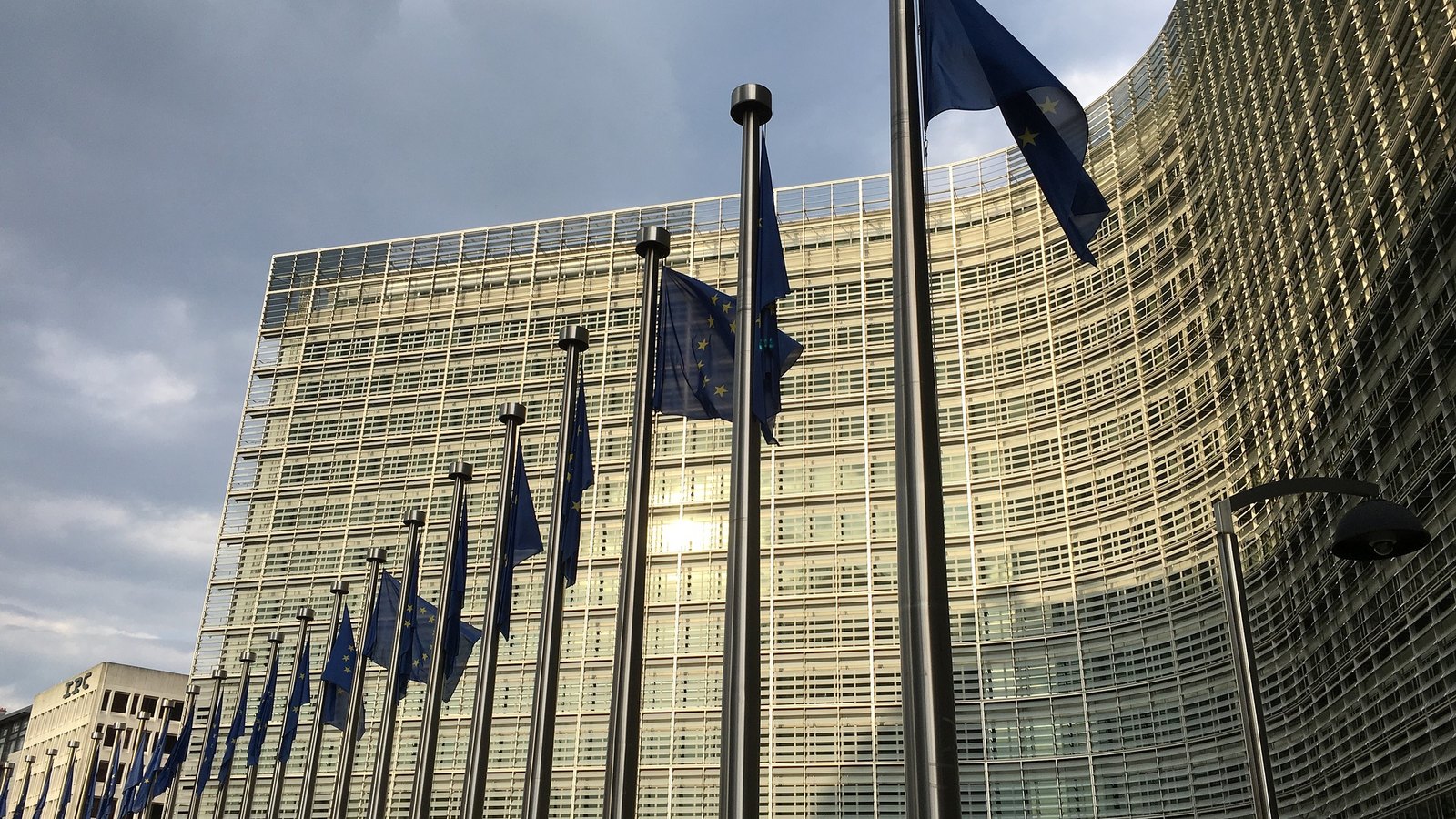
Header photo: Berlaymont building in Brussels by almathias, CC0, via Wikimedia Commons, cropped.
We use AI in our daily operations; posts are reviewed by people before publishing; automated/generated posts are marked as such where needed.