FCC approves SpaceX plan for 1 million orbital data center satellites
The US Federal Communications Commission has authorized SpaceX to place up to 1 million AI computing satellites in orbit, according to CNBC. FCC Chairman Brendan Carr announced the decision on Wednesday, 25 November 2026. CNBC reported that the approval came despite petitions to deny it from Amazon’s Kuiper unit, Viasat and the American Astronomical Society.
What the FCC approved
CNBC reported that the authorization covers SpaceX’s “Starmind” constellation, which is meant to carry AI computing hardware in space. The commission’s filing, numbered DA-26-1273A1, noted that the application drew a substantial number of public comments, the outlet said.
The plan stems from an application SpaceX made to the FCC in early 2026. Broadband Breakfast reported in February that the filing sought permission for a constellation of up to one million satellites in sun-synchronous orbit, a path that allows near-constant exposure to sunlight. The request covered altitudes between 500 km and 2,000 km, arranged in orbital shells of 50 km, the outlet said.
In its letter to the FCC, SpaceX argued the satellites would offer “transformative cost and energy efficiency” by using solar power directly, Broadband Breakfast reported. The same report said the application did not specify the satellites themselves.
Carr wrote on X that Starmind and competing constellations would use solar power to help the United States lead in AI, CNBC reported. Elon Musk replied that the approval would be “a great asset to America and the world.”
Why it matters
The scale is large against today’s orbital population. Broadband Breakfast put SpaceX’s operating fleet at about 9,400 functioning Starlink satellites in February and cited a European Space Agency count of 16,910 satellites then orbiting Earth. On those figures, a million-satellite system would be more than a hundred times SpaceX’s current operational scale.
Starship, SpaceX’s large rocket, was still in development when the application was filed, Broadband Breakfast reported. The article quoted SpaceX saying Starship will be able to deploy millions of tons of mass per year to orbit when launching at rate.
Other companies are pursuing space-based computing too. CNBC said Google announced Project Suncatcher last year and in October launched its first chips into space on a SpaceX rocket and a Planet Labs satellite. It added that Blue Origin asked the FCC in March to allow up to 51,600 satellites for “Project Sunrise,” a low Earth orbit constellation.
Objections and open questions
Opposition came from several directions. In a March petition, Amazon called Starmind a “lofty ambition rather than a real plan” and said SpaceX would need “centuries” to build it, according to CNBC. Amazon is developing a competing satellite internet service. CNBC reported that Carr responded by saying Amazon should focus on falling short of its own satellite deployment milestone. Amazon declined to comment on the approval, and SpaceX did not respond to a request for comment, the outlet said.
Environmental and astronomy concerns also featured. CNBC reported that Earthjustice senior attorney Jan Hasselman criticized the FCC for issuing its decision during a holiday week and without the environmental review he argued the National Environmental Policy Act requires. The FCC said it dismissed comments on subjects it lacks authority over, including environmental issues and effects on optical astronomy, according to CNBC.
Astrophysicist and author Adam Becker told CNBC that a serious attempt at this would further pollute the night sky and risk a chain reaction of space junk collisions. Earlier in the process, George Mason University professor Peter Plavchan warned that a cheap constellation could fill useful orbits and crowd out other operators, Broadband Breakfast reported.
What happens next
Neither source set out a deployment timetable. CNBC did not report launch dates or satellite specifications, and the application as described by Broadband Breakfast left the hardware unspecified. How quickly SpaceX can build and launch such a system, what the satellites will look like, and whether the objectors pursue further challenges all remain unanswered in the material reviewed.
The FCC has said environmental and optical astronomy topics fall outside its authority, while Earthjustice’s Hasselman argues the National Environmental Policy Act requires an environmental review.
Created with AI assistance from the sources listed below.
Sources: FCC approval, Carr and Musk statements, objections from Amazon, Viasat and the AAS, Earthjustice and Becker comments, Google and Blue Origin efforts: SpaceX wins FCC approval to deploy 1 million orbital data center satellites, CNBC, 25 Nov 2026.
Original application details, orbit and altitude range, fleet comparison, Starship dependence, Plavchan comments: SpaceX Seeks FCC Approval For One Million Satellites in Space, Broadband Breakfast, 2 Feb 2026.
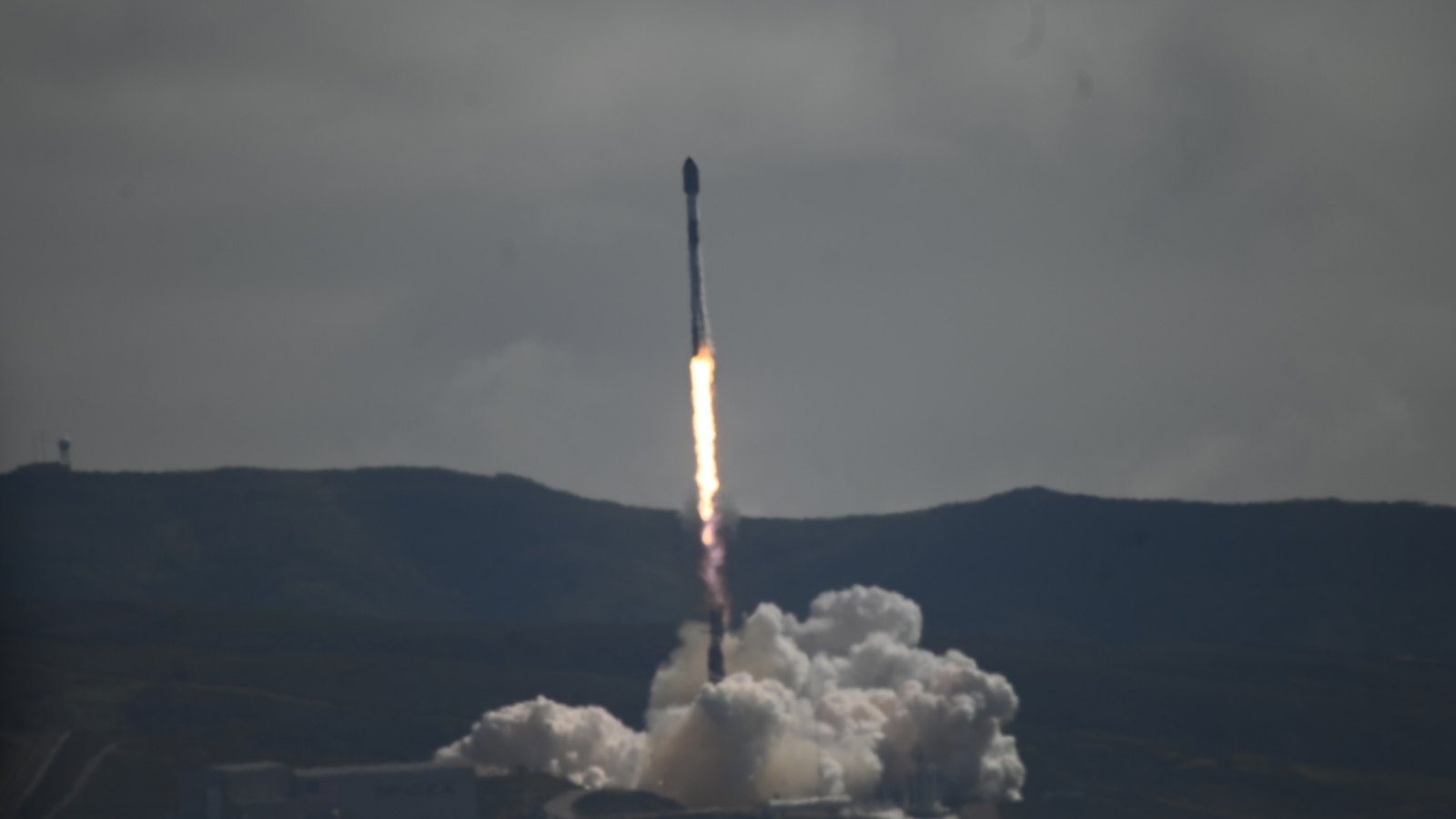
Header photo: Starlink Group 11-7 (8937872) by U.S. Space Force photo by Airman 1st Class Olga Houtsma, Public domain, via Wikimedia Commons, cropped.
We use AI in our daily operations; posts are reviewed by people before publishing; automated/generated posts are marked as such where needed.