A Reef Written Off as Dead 60 Years Ago Turns Out to Be Full of Life
In the 1960s, surveyors looking for productive fishing grounds off the coast of Benin, in West Africa, found what looked like a deep coral reef — and concluded it was probably dead. That verdict stuck for more than six decades. No one had a strong reason to go back and check, and the reef stayed on the record as a lifeless feature of the seabed.
It was wrong. When scientists finally returned with modern tools, they found the reef quietly alive — coral patches more than 50 meters down, hosting fish that no one had documented there in living memory.
How you lose a reef for 60 years
The short answer is that the deep ocean is genuinely hard to see. A reef sitting more than 50 meters below the surface is far beyond casual diving, and the 1960s surveys that first spotted it weren’t marine-biology expeditions — they were fishing surveys, using the tools of the day to map where boats might work. “Probably dead” was a reasonable call given what they could observe. It just went untested for two generations.
What changed is the technology. A team led by Gérard Zinzindohoué of Benin’s Institut de Recherches Halieutiques et Océanologiques returned to the site with modern sonar and the Deep Sea Camera System provided by the National Geographic Exploration Technology Lab — gear that can put working eyes at depths the original surveyors could only guess at. The cameras came back with pictures of healthy coral, not a graveyard.
What’s actually down there
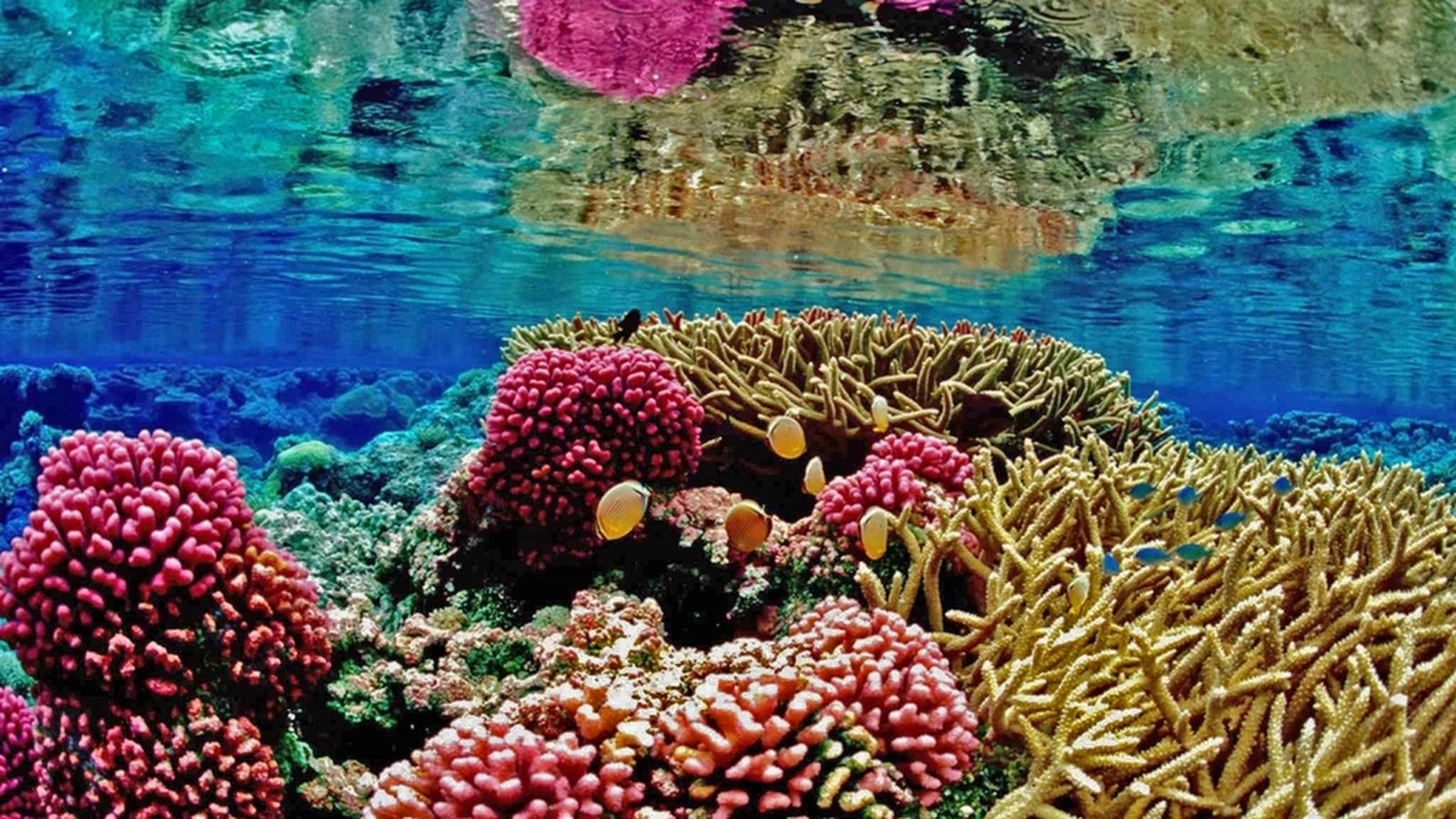
The footage recorded eight different types of coral and eight species of fish, including golden African snappers and blackbar soldierfish moving through the structure. That’s a functioning small ecosystem, not a relic.
There’s an important correction buried in the good news, though. The historical records had imagined a continuous coral barrier running roughly 40 kilometers parallel to the coast. The new survey — which covered only a small section — suggests that isn’t the shape of it. Instead of one monolithic reef, what’s there appears to be separate coral patches growing on rocky sections of the seabed: fragmented pockets of life rather than a single wall. That’s a more modest picture in one sense, but arguably a more interesting one, because it means the biodiversity is scattered across the region rather than concentrated in a single, easily-mapped feature.
Why this matters beyond one reef
The obvious takeaway is hopeful: an ecosystem written off as dead was alive the whole time. But the more useful lesson is about how much we simply haven’t looked. This reef wasn’t destroyed and recovered — it was mislabeled and forgotten, in an era before the tools to check it properly existed. The researchers make the point directly: if one presumed-dead reef off West Africa is actually thriving, the region’s coastal waters likely hold other overlooked habitats that have never been documented at all.
That reframes the discovery from a feel-good story into a to-do list. West Africa’s deep coastal zones are understudied compared with the famous reef systems of the Pacific and the Caribbean, and “understudied” can quietly become “assumed empty.” A single camera drop shows how fast that assumption can collapse. It also raises the stakes for protection: you can’t safeguard what you haven’t confirmed is there, and reefs that exist only as a 60-year-old “probably dead” note in a fishing survey get no protection at all.
The findings were published in Frontiers in Marine Science. For a reef that spent most of a human lifetime officially deceased, it’s an unusually good comeback — and a reminder that in the deep ocean, “we looked once and saw nothing” is not the same as “there’s nothing there.”
Sources: Reef location (off Benin, West Africa), the 1960s “probably dead” fishing-survey verdict, the rediscovery led by Gérard Zinzindohoué (Institut de Recherches Halieutiques et Océanologiques du Bénin), the sonar + National Geographic Deep Sea Camera System, >50 m depth, eight coral types and eight fish species (golden African snappers, blackbar soldierfish), the fragmented-patches-not-a-40km-barrier finding, and publication in *Frontiers in Marine Science*: A coral reef thought dead for 60 years is teeming with life — ScienceDaily.
Corroborating coverage (underwater-drone survey, presumed dead, teeming with life): Underwater drones discover coral reefs off Benin — Frontiers.
Header photo: Exotic fishes coral reef by unknown author, CC0, via Rawpixel, cropped.
We use AI in our daily operations; posts are reviewed by people before publishing; automated/generated posts are marked as such where needed.