NASA’s Newest Space Telescope Was Built for 10 Years. It Now Has Fuel for 22.
Space missions almost never get more than they planned for. Fuel budgets are set years in advance, margins get eaten by delays and course corrections, and “design life” is usually the optimistic number. So it is genuinely unusual news that NASA’s Nancy Grace Roman Space Telescope — launched this year and not yet even parked in its final orbit — has quietly more than doubled how long it can operate, from a 10-year fuel budget to enough for at least 22 years of science.
The extra decade-plus didn’t come from a breakthrough. It came from a series of small things going better than the cautious plan assumed. That’s a story worth understanding, because it’s how spacecraft margins actually work.
Where the fuel went — or rather, didn’t
Roman was designed for a five-year primary mission plus a five-year extension: a 10-year fuel budget in total. Two things have already pushed that number far higher.
The first is a maneuver called a mid-course correction — a nudge to fine-tune the telescope’s path toward its observing post. Roman’s first correction, on August 31, 2026, hit its target trajectory with more than 99% accuracy. Because it was so precise, it sipped fuel: about 40 pounds (18 kilograms), against an allocation of 441 pounds (200 kilograms). Burning barely a tenth of the reserved propellant on the first big maneuver leaves the rest in the tank — worth roughly four extra years of operations on its own.
The second is even simpler: Roman is lighter than the engineers were required to assume. Mission planners size fuel against a cautious maximum mass so they’re never caught short. That ceiling was 21,605 pounds (9,800 kilograms). The telescope actually launched at 17,760 pounds (8,056 kilograms) — nearly two tons under the planning limit. A lighter spacecraft needs less propellant to move, so the surplus fuel that was budgeted for weight that never materialized converts, again, into roughly four more years of life.
Why “cautious” math pays off later
There’s a quiet lesson in this about how careful engineering compounds. None of these gains were flashy. Nobody invented a new engine. What happened is that a team built in conservative margins at every step — a heavier assumed mass, a generous fuel allocation for the first burn — and then reality came in under budget on each one. When you stack “better than the worst case” across several independent estimates, the leftover adds up fast. A 10-year budget becomes 22.
It also means the gains aren’t finished. Roman’s second mid-course correction, scheduled for later in September 2026, is expected to be very small and to save even more fuel. Orbital insertion around L2 — the gravitationally stable point about a million miles from Earth where Roman will actually do its work — is projected for early December, roughly 100 days after launch.
What 22 years actually buys
This isn’t just a bragging number. Roman’s job is wide-field surveys: mapping enormous swaths of sky to study dark energy, hunt for exoplanets via microlensing, and build statistical samples of the universe that require patience more than anything else. That kind of science scales almost directly with time on station. Doubling the operational lifetime doesn’t just extend the mission — it changes what questions are answerable, because the longest baselines and the biggest surveys become possible where before they’d have been cut short by an empty tank.
For a telescope that hasn’t even reached its final orbit yet, “fuel for at least 22 years” is about the best housewarming gift a mission can get — and a reminder that in spaceflight, the boring virtues of conservative planning and a precise first burn can be worth an extra decade of discovery.
Sources: Mission lifetime (10-year budget → at least 22 years), first mid-course correction date (Aug 31 2026) and >99% accuracy, fuel used (18 kg / 40 lb vs 200 kg / 441 lb allocation), launch mass (8,056 kg / 17,760 lb) vs planned maximum (9,800 kg / 21,605 lb), second correction and early-December L2 insertion: Fuel Savings Double Potential Lifetime for NASA’s Roman Mission — NASA Science (Ashley Balzer).
Corroborating coverage: NASA’s Roman Space Telescope could last more than twice as long as planned — ScienceDaily.
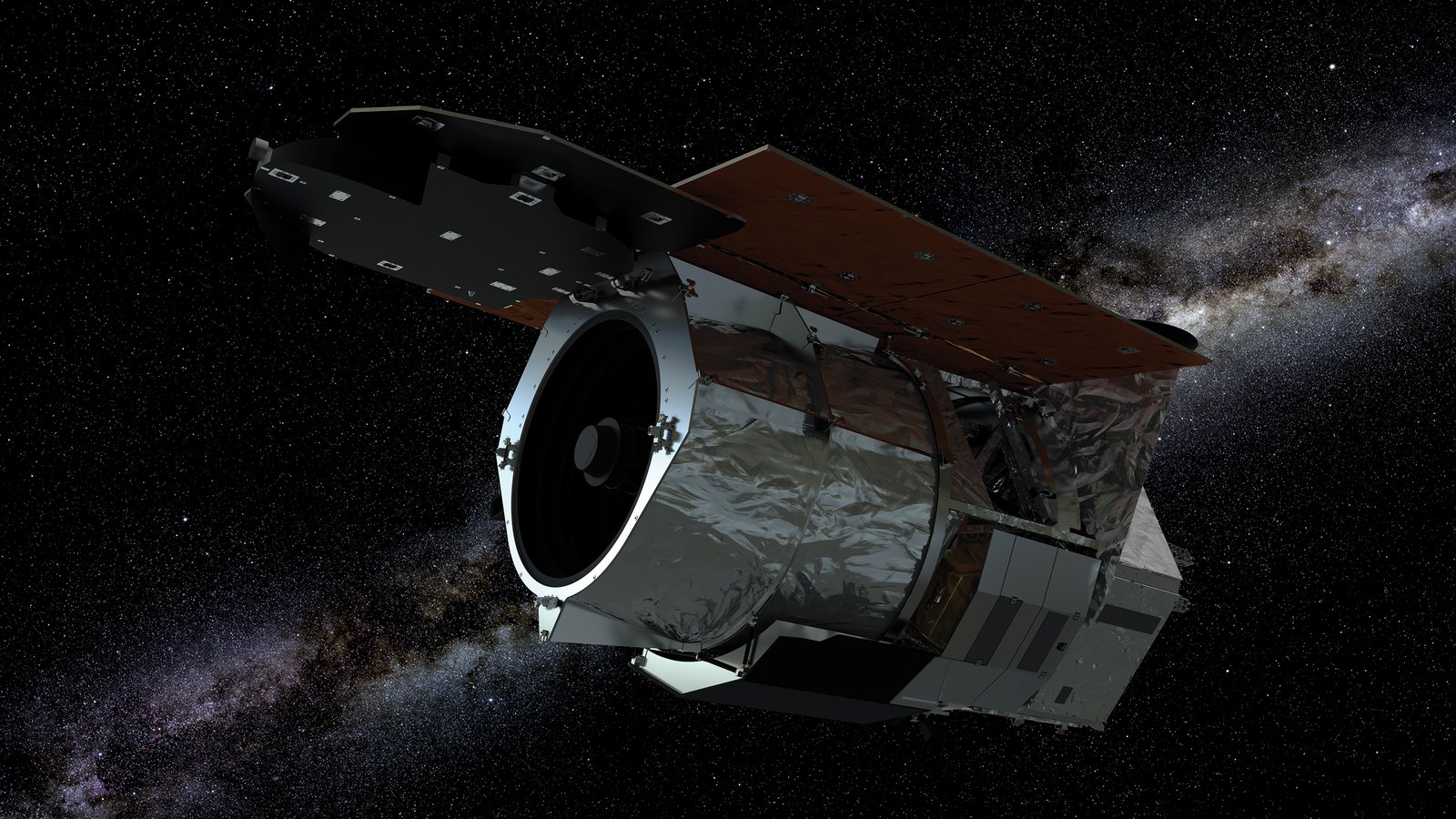
Header photo: Nancy Grace Roman Space Telescope (2020-35-4665) by IMAGE: NASA, NASA-GSFC, Public domain, via Wikimedia Commons, cropped.
We use AI in our daily operations; posts are reviewed by people before publishing; automated/generated posts are marked as such where needed.