NASA Set to Reveal Artemis III Crew for Historic Lunar Mission Test Flight
NASA is preparing to unveil the four astronauts selected for the Artemis III mission, a major step in the agency’s long-term effort to return humans to the Moon and eventually send crews to Mars. The announcement is scheduled for June 9 during a live event at the Johnson Space Center in Houston.
The Artemis III mission will carry four astronauts aboard the Orion spacecraft, launched from Florida on NASA’s powerful Space Launch System (SLS) rocket. While the mission’s primary goal is not a lunar landing, it will play a crucial role in validating technologies required for future Moon exploration.
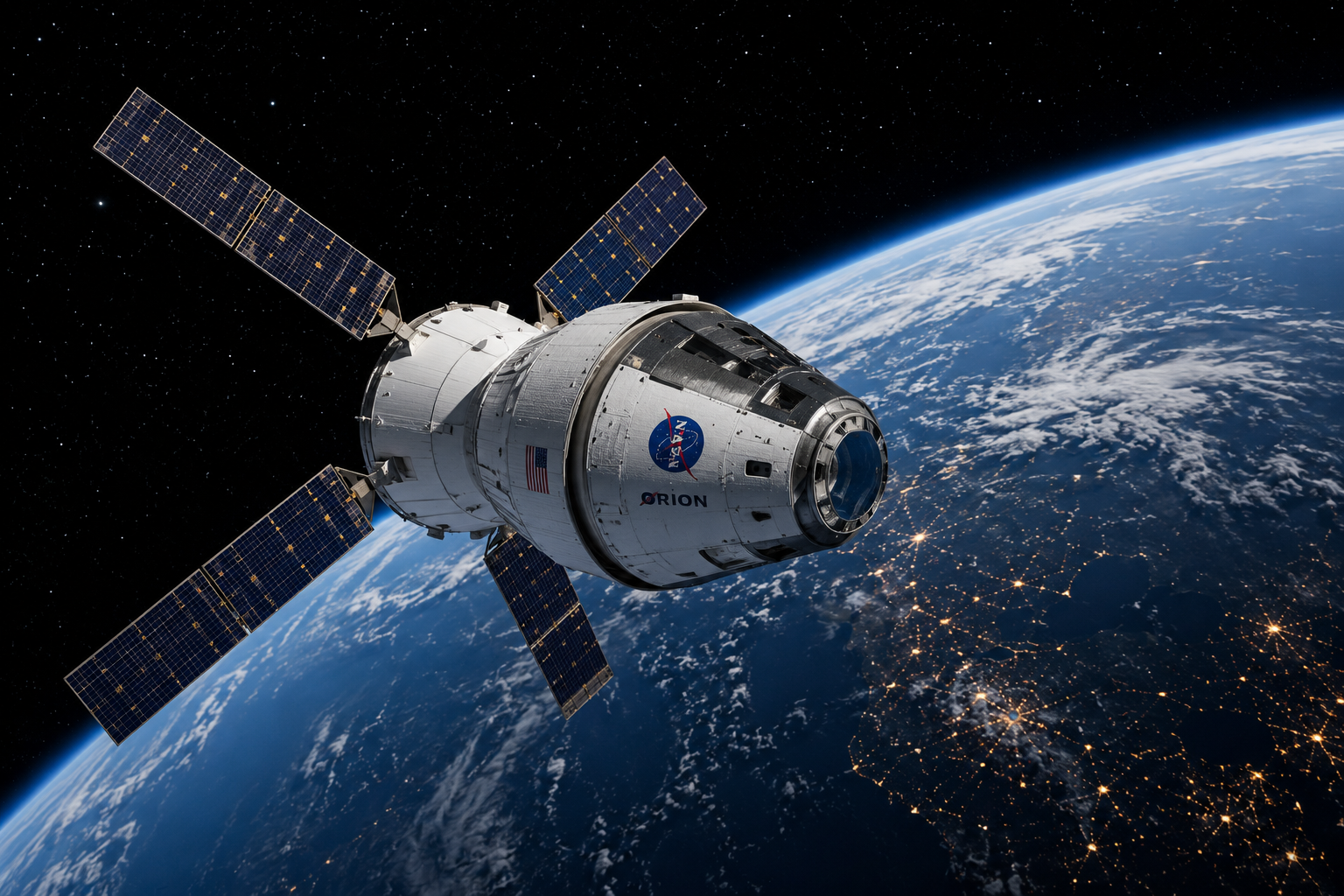
AI-generated image created for illustrative purposes.
One of the key objectives will be testing rendezvous and docking operations between Orion and commercial lunar landing vehicles. These maneuvers are considered essential for future missions that will transport astronauts from lunar orbit to the Moon’s surface and back.
NASA officials are also expected to provide an update on the progress of the Artemis program, which represents the agency’s most ambitious human spaceflight initiative since the Apollo era. The mission follows the successful Artemis II crewed test flight and will help refine systems needed for increasingly complex lunar expeditions.
The Artemis campaign aims to establish a sustainable human presence on and around the Moon while supporting scientific research, technological innovation, and future commercial opportunities in space. NASA views the Moon as a critical testing ground for the technologies and operational experience required for eventual crewed missions to Mars.
Following the crew announcement, the selected astronauts are expected to participate in interviews, offering the public an early look at the team that will help shape the next chapter of human space exploration.
As global interest in lunar exploration continues to grow, the Artemis III crew announcement marks another milestone in humanity’s renewed journey beyond Earth orbit. The mission is expected to lay the groundwork for future expeditions that could transform how humans live and work in deep space.