Romania invites Germany into Black Sea security hub and seeks NATO watch on Neptun Deep
Romania’s foreign minister, Dan Neculăescu, asked Germany to take part in a maritime security hub that Romania is developing with Bulgaria, during talks in Berlin on 26 November 2026 with German Foreign Minister Johann Wadephul, Mediafax reported. In an interview with the German newspaper Welt published the next day, he also said Romania supports NATO monitoring of the Neptun Deep gas installations and called for a common NATO approach to hybrid attacks, according to Mediafax and Digi24.
What was said
According to Mediafax, the Berlin meeting covered bilateral cooperation, security on NATO’s eastern flank and the Black Sea. Neculăescu asked for a larger German military presence in Romania, including more defence capabilities. Mediafax reported that Neculăescu cited Russian airspace violations, attacks on civilian ships, hybrid actions and sabotage, and said Black Sea security must stay a priority for NATO and the EU.
On the hub, Mediafax said Romania will host a maritime security centre under the EU’s Black Sea strategy, and that Romania and Bulgaria are building it together. Its stated aims are better information sharing, real-time maritime monitoring, early warnings and protection of critical infrastructure. Mediafax reported that Neculăescu invited Germany to take part. Ziarul Financiar, which cited the German daily Bild, carried the same call and quoted him calling Germany indispensable for the mission.
In the Welt interview, as summarised by Mediafax, Neculăescu said Romania supports NATO monitoring of the Neptun Deep installations. He described the project as the EU’s largest natural gas production project, one that reduces Europe’s energy dependence, and said the war nearby is already complicating the works. Mediafax also reported that Romanian fighter jets intercepted an explosive-laden maritime drone this summer when it was a few hundred metres from the platform.
Digi24, citing the same interview, reported that Neculăescu wants NATO to take joint measures against hybrid attacks. He described them as military, economic, intelligence and propaganda operations, often by states that hide their involvement, plus cyberattacks and disinformation. He said they have so far been handled as national matters in the EU and NATO, and asked whether the same actors were behind incidents in Germany, Estonia and Romania. He said that at the very least a common picture of the situation is needed, along with a systematic search for links between incidents.
Why it matters
Neculăescu told Welt that Russia is trying to claim the Black Sea for itself, Digi24 reported. Digi24 said he pointed out that other states, such as Bulgaria, Turkey and Ukraine, are also in the region, and that no other part of Europe sees as many incidents attributed to Russia, including drone attacks, sea mines and attacks on commercial ships. Citing dpa, Digi24 added that commercial ships near the Romanian coast have been attacked several times recently, allegedly by Russian drones, and that some people were killed or injured and some ships sank. NATO has stepped up air and maritime patrols, the outlet said.
Digi24 also reported that allies are split. Some want defence against hybrid attacks to become an operational NATO task, while others object because they fear it would raise tensions with Russia.
Mediafax said Neculăescu described the EU centre as the bloc’s first truly operational presence on the Black Sea, complementing NATO. The centre is planned for Constanța in Romania and Varna in Bulgaria, and Commission President Ursula von der Leyen promised 50 million euros for it, according to Mediafax.
Ziarul Financiar reported that Romania, which has the longest border with Ukraine of any NATO member, is among the allies that have shot down the most drones, and that Bucharest wants extra armaments and support until weapons systems it has already ordered are delivered.
What happens next
The sources describe an invitation, not a German decision. Mediafax said Wadephul recalled Germany’s part in the air policing mission over Romania, and noted that from December Germany will send five Eurofighter jets to Estonia and that it keeps a brigade in Lithuania. Mediafax said he reaffirmed German solidarity with Romania. None of the articles read announced a dedicated NATO mission for Neptun Deep or a formal NATO strategy on hybrid attacks, and Digi24 gave no timeline for one.
Ziarul Financiar added that a decision on the size of the future US troop presence in Romania could come in early December, and that Neculăescu called signals from Washington on keeping US forces “positive”.
What it means for Romania
Neculăescu told Mediafax that Romania is coordinating with NATO and allies on temporary reinforcements until equipment ordered through procurement programmes arrives, and that several allies have already deployed to Romania with more expected.
Created with AI assistance from the sources listed below.
Sources: Berlin meeting, hub invitation, Wadephul remarks, German deployments: România solicită sprijin militar suplimentar Germaniei. Neculăescu: Suntem statul cel mai expus incidentelor, Mediafax, 26 Nov 2026.
Neptun Deep monitoring, drone incident, Welt interview, EU centre funding: România cere NATO să monitorizeze Neptun Deep. Dan Neculăescu: „Rusia încearcă să își revendice Marea Neagră”, Mediafax, 27 Nov 2026.
Call to bring Germany into the Black Sea mission, drones, US troops: România cere ajutor de la aliații NATO și vrea să implice Germania în securizarea Mării Negre, Ziarul Financiar, 27 Nov 2026.
Hybrid attacks, common NATO approach, Russia and the Black Sea: De ce vrea România o strategie comună NATO pentru atacurile hibride, Digi24, 27 Nov 2026.
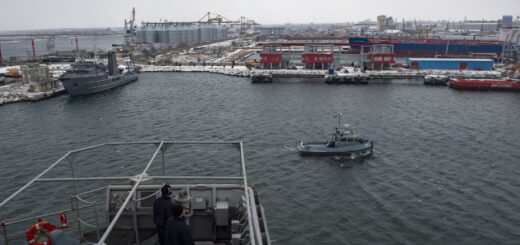
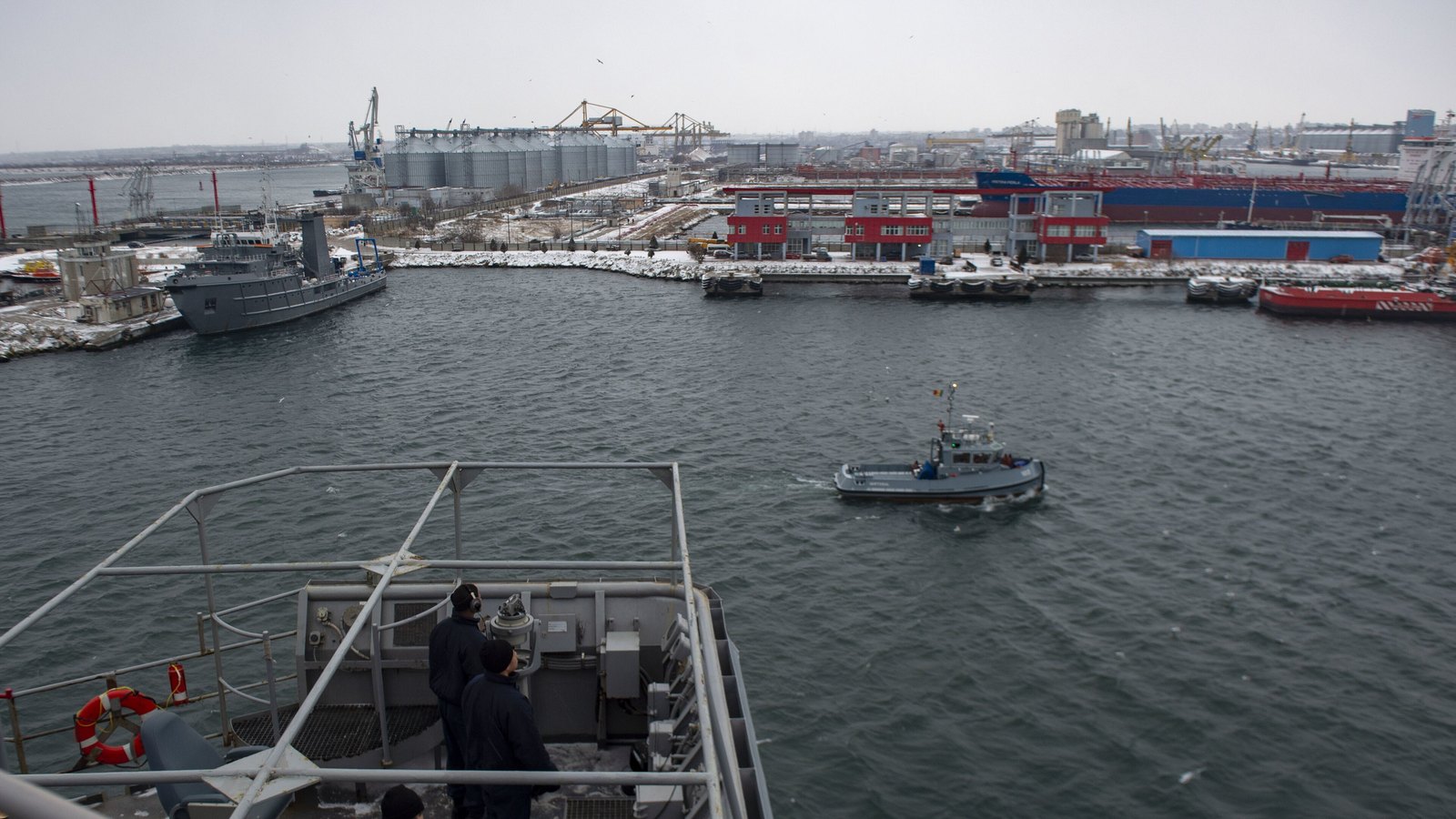
Header photo: USS Fort McHenry pulls into Constanța for a scheduled port visit by Mass Communication Specialist 3rd Class Chris Roys, Public domain, via Wikimedia Commons, cropped.
We use AI in our daily operations; posts are reviewed by people before publishing; automated/generated posts are marked as such where needed.