Scientists Read a 4,000-Year-Old Letter Without Opening It — and a Frustrated Woman’s Voice Came Out
Some of the oldest letters we have were never meant to be read by us. They were personal notes, sealed in clay and never reopened, and for most of history the only way to see inside one was to crack it open and risk destroying it. So archaeologists faced a quiet dilemma: a sealed ancient envelope is a message and an artifact, and reading the message usually means damaging the object.
A team has now sidestepped that trade-off. Using a portable CT scanner, they read a roughly 4,000-year-old letter while it sat still sealed inside its original clay envelope — and what came out was not a king’s decree or a temple inventory, but a woman named Anna-anna, chasing down a debt and thoroughly fed up.
Reading through the clay
The tool is a transportable, high-resolution computed-tomography system called ENCI. It’s the same basic idea as a medical CT scan: fire X-rays through an object from many angles and reconstruct the interior in three dimensions. Here the “interior” is a wafer of inscribed clay — a cuneiform tablet — folded inside a second layer of clay that served as its envelope. The scanner captures the shapes of the wedge-pressed signs without anyone touching the original, and software reconstructs the text.
That matters because it flips the old dilemma. The letter can be read and the sealed envelope preserved intact — no destructive opening, no gamble. Being portable, the scanner can also travel to the artifacts in museums rather than requiring fragile objects to travel to a lab.
What the letter actually said
The message was written by a woman named Anna-anna to her husband, an Assyrian merchant named Ennum-Aššur. Merchant men in this world spent long stretches away on trade, and the letter is a window into who ran things while they were gone: their wives. Anna-anna is dealing with business — an unpaid debt owed by a man named Laqēpum — and she is managing it herself, on the household’s behalf.
She’s also frustrated, and it survives across four millennia intact. “I hear bad words all the time!” she writes — a line that needs no scholarly gloss. It’s the sound of someone stuck chasing a deadbeat debtor and taking grief for it, in the first half of the second millennium BCE.
That ordinary human texture is the real find. We tend to know the ancient world through its monuments and its powerful men. A sealed private letter, read without being disturbed, hands us instead the day-to-day: a woman with authority over her family’s money, doing the unglamorous work of collections, and not enjoying the earful that came with it.
Not the only thing hiding in the envelopes
The scanning campaign turned up more than one surprise. Another sealed envelope held a letter about an ancient loan arrangement — more evidence of the dense credit relationships that ran these trading networks. And inside one envelope, alongside the tablet, sat a preserved 4,000-year-old barley grain: a tiny agricultural time capsule that no one would have known was there without a way to see inside without breaking in.
The broader implication is the same one that keeps recurring in modern archaeology: our collections already contain things we can’t yet see. Museums and dig stores around the world hold sealed clay envelopes that have never been opened precisely because opening them is risky. A non-destructive way to read them turns those shelves into an unread library — messages, contracts, and the occasional exasperated note, all waiting to be scanned rather than cracked.
The work was published in npj Heritage Science.
Sources: The 4,000-year-old sealed letter read without opening it, the ENCI portable high-resolution CT method, sender and recipient (Anna-anna to the merchant Ennum-Aššur), the letter’s content (unpaid debt owed by Laqēpum; women’s role in merchant households; the quote “I hear bad words all the time!”), the additional loan-letter and the preserved barley grain, and publication in *npj Heritage Science*: Scientists read 4,000-year-old Assyrian letter without opening its clay envelope — SyriacPress.
Corroborating coverage: A Portable Scanner Just Unlocked Messages From A Sealed Clay Envelope No Human Has Read In 4,000 Years — The Daily Galaxy.
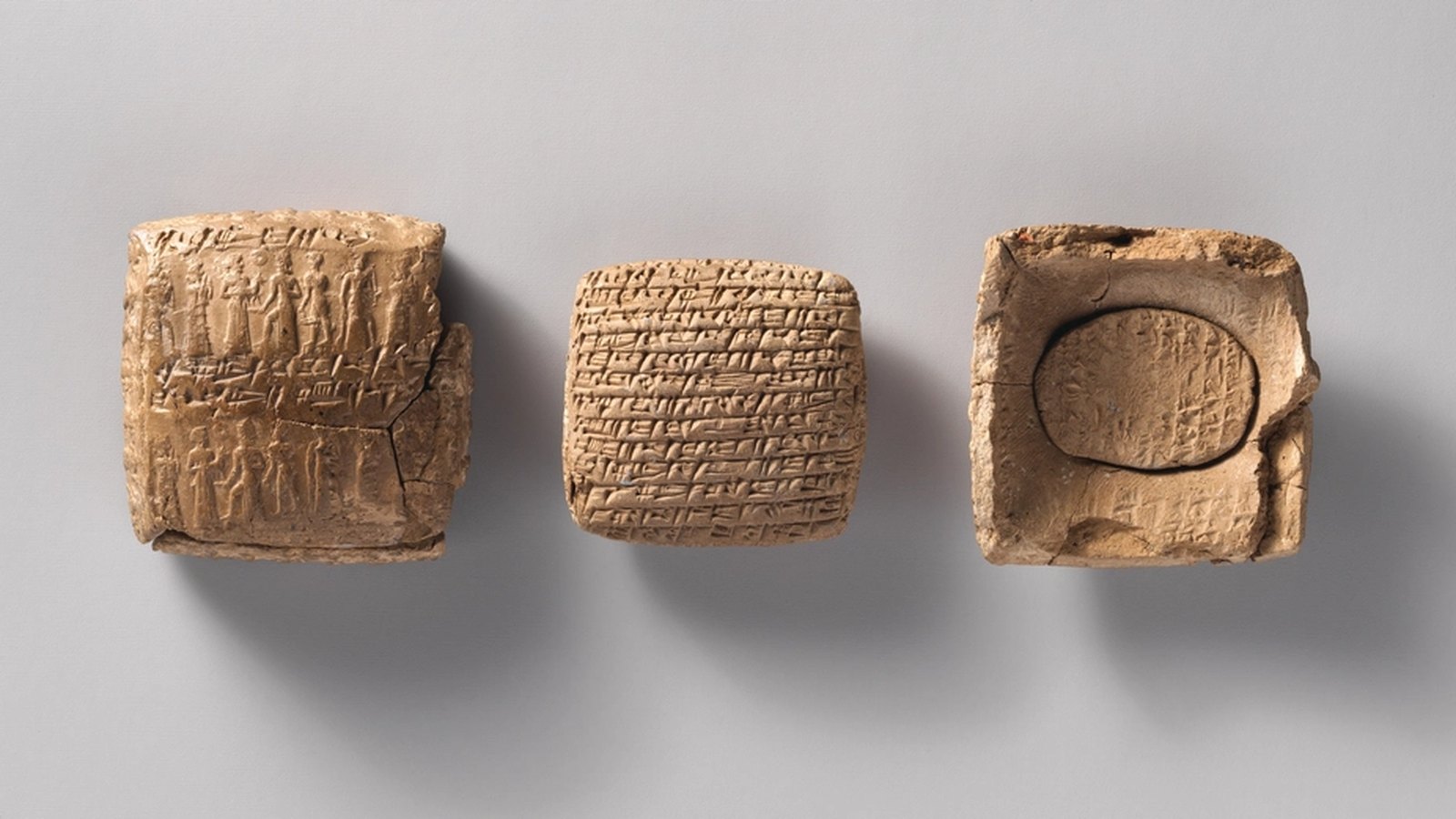
Header photo: Cuneiform tablet small second tablet: by themet, CC0, via Rawpixel, cropped.
We use AI in our daily operations; posts are reviewed by people before publishing; automated/generated posts are marked as such where needed.