Your gut bacteria may signal how fast your brain is aging
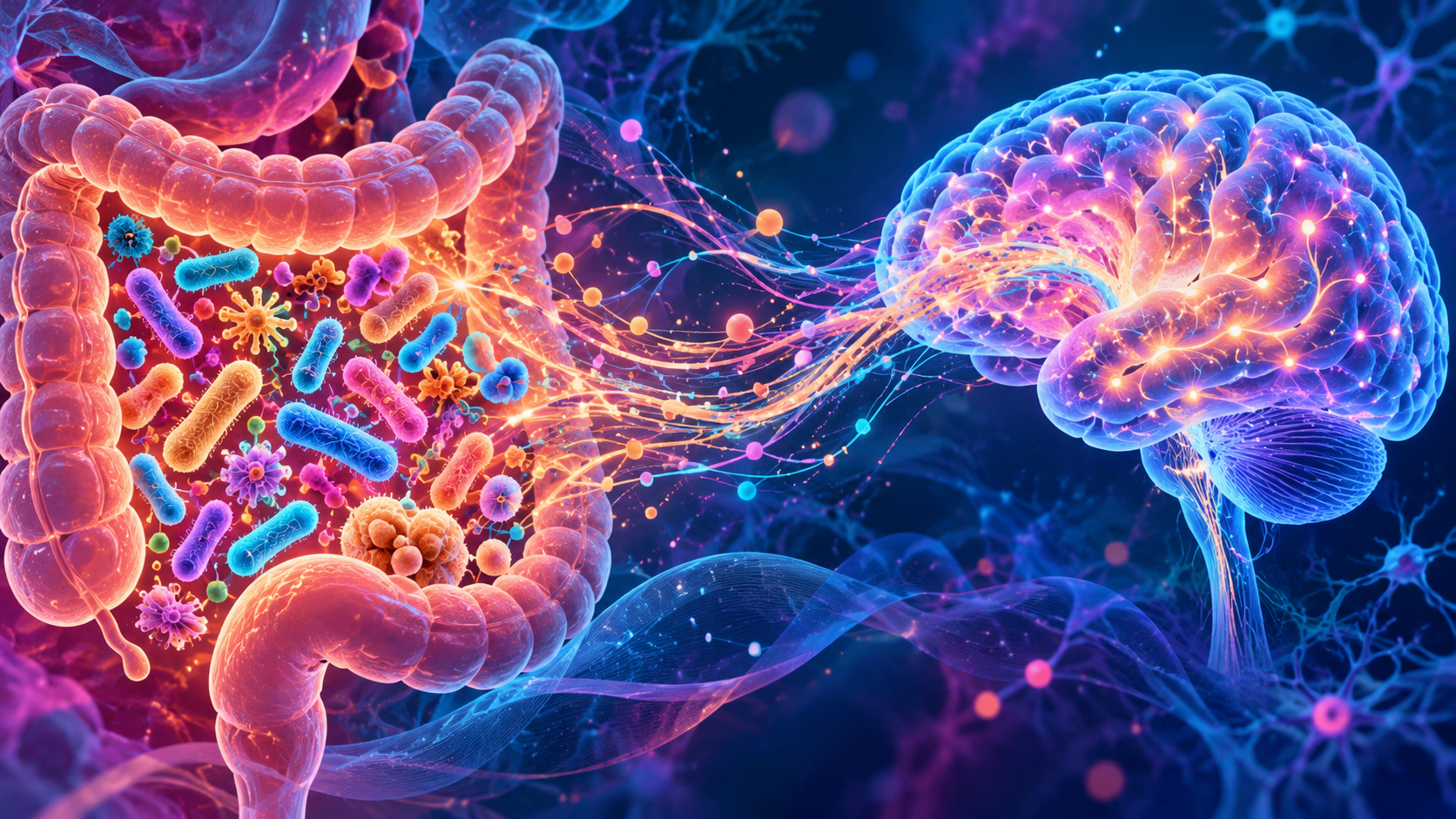
Brain aging, it turns out, may not wait for old age to announce itself. A new study from UCLA Health suggests the biological signs can appear decades before any symptoms — and that some of those signs may be readable not in the brain at all, but in the gut.
The work, published in the peer-reviewed journal eBioMedicine in September 2026, drew on data from nearly 1,500 adults across three separate study groups. The researchers, led by Dr. Arpana Church, co-director of the Goodman-Luskin Microbiome Center at UCLA Health, built what they call a Brain Aging Index. Using resting-state brain scans, they measured the patterns of communication between different brain regions, then trained a computer model to estimate each person’s “brain age” from those connectivity patterns. The index is simply the gap between that estimated age and the person’s actual chronological age: a positive score means the brain looks older than the calendar says it should.
That number turned out to track meaningfully with how people were doing. Participants whose brains looked older than expected tended to score worse on tests of working memory and executive function — the mental skills behind focus, planning and organization — and they reported more symptoms of depression. In other words, the index was not just an abstract measurement; it lined up with the everyday cognitive and mood changes people actually notice.
The more striking part is where else the signal showed up. When the team looked at participants’ gut microbiomes and the chemical byproducts their bacteria produce, a higher Brain Aging Index was associated with a specific chemical signature: certain fat molecules, a cholesterol-related compound, and lower levels of a hormone called estetrol. Tracing those molecules back to biological pathways pointed at the immune system, the health of blood vessels, communication between brain cells, and the way cells generate energy — all processes already suspected of playing a role in how the brain ages.
It is worth being precise about what this does and does not show. This is an association study, not a demonstration of cause and effect. The data cannot tell us whether gut bacteria are driving faster brain aging, whether an aging brain reshapes the gut, or whether some third factor — diet, inflammation, genetics — is nudging both at once. Dr. Church is careful on this point, framing the gut as “a potential target for future interventions” rather than a proven lever, and noting the findings “could ultimately help us understand who may be at risk.”
Even with that caveat, the appeal of the idea is clear. The brain is difficult and expensive to probe directly, and by the time memory problems become obvious, a great deal of change has usually already happened. As Dr. Church puts it, “Brain aging doesn’t suddenly begin when we get older, but the biological signals may be detectable decades earlier.” A blood or stool sample that captured some of those early signals would be far easier to collect — and far earlier — than waiting for a diagnosis.
The gut-brain axis has been one of the most active and most hyped areas of biology over the past decade, and plenty of early claims have failed to hold up. What distinguishes this study is its scale, its use of three independent groups, and its grounding in a concrete, measurable brain-imaging index rather than vague self-reports. That makes it a more solid foundation for the next, harder question: whether changing the gut — through diet, specific compounds, or targeted therapies — can actually slow the clock the index is measuring.
For now, the practical takeaway is modest but genuine. The state of your gut appears to carry information about the state of your aging brain, potentially long before anything feels wrong. Turning that information into prevention is the work still ahead.
Sources: The *eBioMedicine* study (September 2026), the ~1,500-participant three-cohort design, lead author Dr. Arpana Church of the Goodman-Luskin Microbiome Center, the Brain Aging Index built from resting-state connectivity scans, the gut-metabolite signature (fat molecules, a cholesterol-related compound, lower estetrol), the working-memory / executive-function / depression associations, the association-not-causation framing, and the researcher quotes: Brain aging may be detected decades before symptoms appear, with links to gut health — UCLA Health.
Corroborating coverage with the same findings and figures: Your gut bacteria may reveal how fast your brain is aging — ScienceDaily.
We use AI in our daily operations; posts are reviewed by people before publishing; automated/generated posts are marked as such where needed.