Oil Just Crossed $100 Again. Economists Say That’s Not the Number to Watch.
Brent crude touched nearly $110 a barrel this week, eased slightly to around $107, and every headline that ran the “$100 oil is back” line was technically correct. What most of them left out is that the economists actually watching this crisis aren’t especially worried about the crude price itself — and the reason why says more about how the economy has changed since the last time triple-digit oil made front pages.
Why oil is back above $100
The current spike traces back to the 2026 war between Iran and a U.S.-Israel coalition, and specifically to the closure of the Strait of Hormuz — the channel through which more than 20% of the world’s oil trade passes. Iran also struck Qatar’s Ras Laffan LNG complex in March, cutting the country’s production capacity by 17% with repairs expected to take three to five years, and the East-West Crude Oil Pipeline was shut down as recently as September 11. Brent has swung wildly through the year as a result: roughly $80 in early March, spiking to $118 later that month, falling back to around $70 by July 1, then climbing again to this week’s near-$110. Analysts are already calling it the largest supply disruption in the history of the global oil market.
Why the economists aren’t panicking about the crude number
Michael Pearce of Oxford Economics put it plainly: “There is not a ‘tipping point’ for crude oil prices that will tip the economy into recession.” Patrick De Haan of GasBuddy went further, estimating oil would need to reach roughly $200 a barrel to hit the U.S. economy the way $100 oil once did.
The reason is a structural shift most people don’t track: in 1980, the last time oil shocks genuinely rattled the economy, Americans spent about 6% of their income on gasoline. Today that figure is roughly 2.5%. Cars use less fuel per mile, the economy produces more value per barrel consumed, and household budgets simply aren’t as exposed to the crude price the way they were two oil shocks ago. A headline number that once meant recession-level pain now registers as a much smaller shock to the system.
What actually is the threat, then
The economists’ concern isn’t the $107 crude price — it’s what’s happening downstream of it. The national average diesel price hit a record $6.39 a gallon this week, up from $3.70 a year earlier — a 73% jump. Regular gasoline is trending toward $4.43 a gallon, up from $3.20 a year ago. Both numbers are rising faster than crude alone would explain, because refinery capacity — not just crude supply — has become its own bottleneck. Diesel in particular runs through freight, agriculture, and shipping, so a diesel spike moves through the economy differently than a gas-pump number consumers simply grumble about at the pump.
That’s the actual mechanism worth watching: not whether crude sits above or below the psychologically loaded $100 line, but whether refined-fuel prices keep climbing faster than crude itself — because that’s the gap that shows up in freight costs, food prices, and everything else diesel touches, long before it shows up in a headline about a barrel of oil.
Sources: Brent crude price levels and week-over-week movement, diesel and gasoline price figures (current and year-ago), named economist quotes (Michael Pearce, Patrick De Haan), 1980-vs-today gas spending share: Oil Is Back Above $100 — But Economists Say That Number Isn’t the Real Threat to the U.S. Economy — Fortune.
War background, Strait of Hormuz closure, Ras Laffan LNG strike, East-West pipeline shutdown, full-year Brent price timeline: 2026 Iran War Fuel Crisis — Wikipedia.
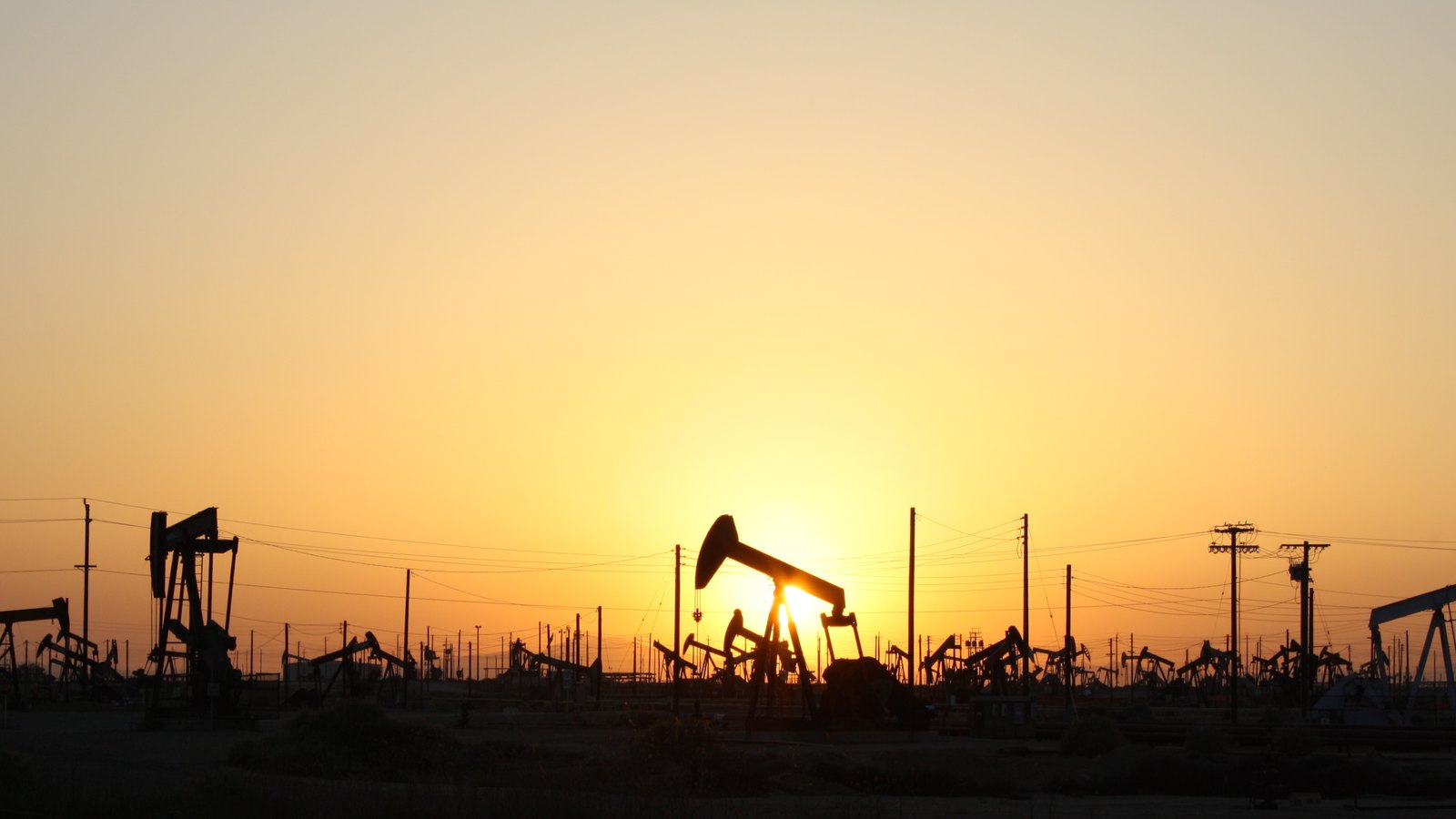
Header photo: Pumpjacks by Arne Hückelheim, CC BY-SA 3.0, via Wikimedia Commons, cropped; this crop is released under the same licence.
We use AI in our daily operations; posts are reviewed by people before publishing; automated/generated posts are marked as such where needed.