Interrail and Eurail passes in 2026: validity, prices, and where Romania fits in
Travelers asking how long a rail pass lasts across Europe, and what it actually costs, are dealing with a system that changed its own name this year. Since September 10, 2026, the Eurail Global Pass has been folded into a single brand called Interrail, according to the official Interrail site (interrail.com). The company behind both names, Eurail Group G.I.E., says the product itself — the network, the price tiers, the terms — did not change; only the label did, with the Interrail site stating the pass is “valid for travel with participating train, ferry and public transport companies” across 33 countries.
Two kinds of pass, two ways to count days
The core choice is between a Global Pass, usable across all 33 participating countries, and a One Country Pass, limited to a single country. Within the Global Pass, travelers pick between a “flexi” format — a set number of travel days used within a one- or two-month window — or a continuous pass that covers every day of a fixed stretch without interruption.
According to Seat61.com’s 2026 Interrail guide, flexi options for an adult in second class run from 4 days of travel within one month at €283, up to 15 days within two months at €553, with intermediate steps at 5 and 7 days and at 10 days within two months. Continuous passes, which suit travelers who want to move almost daily, are priced from €476 for 15 straight days up to €956 for three full months of unlimited travel, per the same guide. Youth travelers under 28 get roughly 25 to 30 percent off these adult second-class fares, and seniors aged 60 and over save on the order of 10 to 15 percent, Seat61.com reports. The same source notes that a pass can be activated any time within 11 months of purchase, so buying early does not force an early start date.
Those headline prices do not cover everything. Seat61.com warns that in France, Italy and Spain, travelers should “reckon on a €10+ reservation fee for every train other than purely local ones,” while pass-friendly rail systems such as Germany’s and Austria’s generally let pass holders board without a paid reservation.
Where Romania sits on the map
Romania’s national operator is CFR Călători, and the country is covered by its own Interrail One Country Pass, not just the Global Pass. According to CFR Călători’s official site (cfrcalatori.ro), the Romania pass lets travelers choose 3, 4, 5, 6 or 8 travel days “within a period of one month validity,” with listed adult second-class prices of €105 for 3 days, €152 for 5 days and €216 for 8 days. Youth and senior travelers get discounted rates, and children travel free, up to two per adult pass, per the same page.
Romania’s network itself has a straightforward hierarchy. Per the Wikipedia entry on Romanian railway services, CFR classifies its passenger trains into Intercity (IC), InterRegio (IR) and Regio (R) categories, with EuroCity and EuroNight services run jointly with partner national carriers on international routes. The same overview lists Bucharest’s main station, București Nord, as the country’s central hub, with intercity links reaching Cluj-Napoca in the northwest, Brașov in the center, Sighișoara in Transylvania, and Timișoara in the west — the cities that typically anchor a Romania leg of a longer pass-based itinerary.
For travelers linking Romania into a wider European trip, one concrete option is the overnight Dacia Express. According to Seat61.com’s page on international trains from Bucharest, the Dacia Express leaves București Nord at 16:00 and arrives in Vienna at 08:53 the next morning, stopping along the way at Ploiești Vest, Sinaia, Brașov, Sighișoara, Alba Iulia and Simeria. The train offers 1-, 2- and 3-bed sleeping compartments with washbasins, deluxe compartments with an en suite shower and toilet, and a couchette car with 4- and 6-berth layouts, the same source reports, adding that the daylight stretch between Ploiești and Brașov through the Carpathian mountains is especially scenic in spring and summer. That single overnight journey covers much of the ground a Global Pass holder would want to see in Romania before continuing toward Central Europe.
What this means in practice is that a traveler does not have to choose between “doing Europe” and “doing Romania” on one trip. A Global Pass covers the cross-border legs, including services like the Dacia Express, while CFR Călători’s own Interrail-affiliated pass or point-to-point tickets handle closer exploration of Transylvanian towns along the same corridor. Reservation rules and fees still vary by country, so checking each operator’s requirements before departure remains part of planning the trip, rather than an afterthought once the pass is already activated.
Sources: Interrail official site: Interrail Global Pass information.
Seat61.com: How to use an Interrail pass — 2026 guide.
Seat61.com: International trains from Bucharest, including the Dacia Express.
CFR Călători official site: Interrail One Country Pass for Romania.
Wikipedia: Romanian railway services.
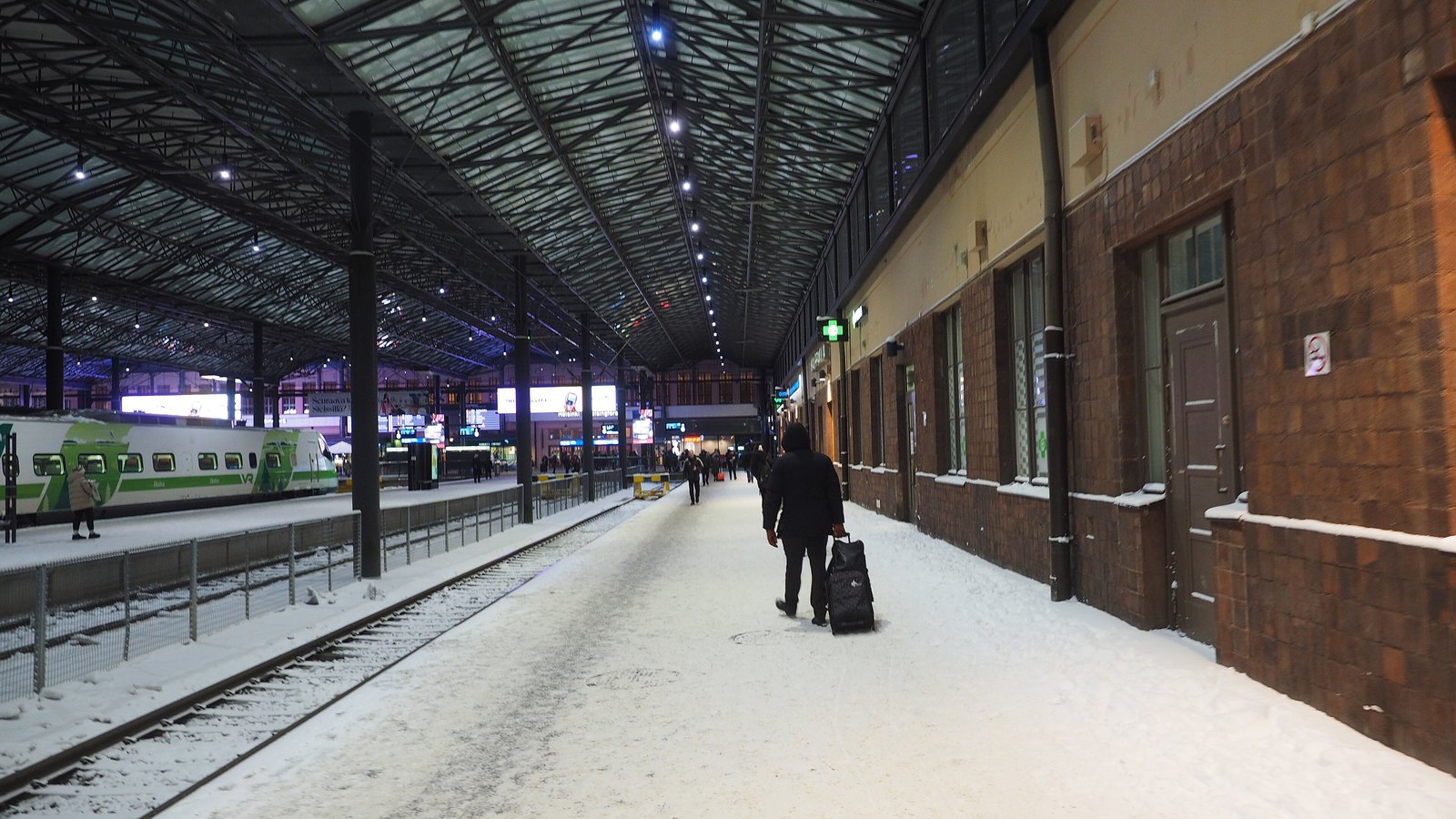
Header photo: Platform at Helsinki Central railway station on a January evening by JIP, CC BY-SA 4.0, via Wikimedia Commons, cropped; this crop is released under the same licence.
We use AI in our daily operations; posts are reviewed by people before publishing; automated/generated posts are marked as such where needed.