Romania work visa from Morocco in 2026: embassy, fees and how to avoid scams
Morocco is one of the main countries of origin for Romanian work authorisations, according to a 14 July 2026 release from Romania’s General Inspectorate for Immigration (IGI). Two sets of rules apply: Romania decides the visa, and Moroccan law controls who may recruit you for a job abroad and what they may charge. This guide sets out what official sources in both countries say in November 2026. Fees change, so check each figure with the office concerned before you pay.
Where Moroccans apply: the embassy in Rabat
Visas are handled by the consular section of the Embassy of Romania in Rabat, 10, Rue Ouazzane, Hassan, whose consular area covers Morocco and Mauritania. The embassy’s Romanian-language consular page says:
- you first file the application on the e-Visa portal (evisa.mae.ro) and enter the consular section only with the appointment it gives you
- you must appear in person, with supporting documents in original and copy
- no applications are accepted through intermediaries or representatives, or by email, post or fax
- consular appointments are free
- someone who cannot use the portal can come during public hours to get an appointment
The same page gives public hours of Monday to Thursday, 09:00 to 15:00, a call centre (+212 537 72 14 93) and the email [email protected]. The embassy’s English page still lists different hours, so confirm before you travel.
The embassy lists honorary consulates in Agadir, Casablanca, Fès, Marrakech and Tangier. It does not say that any of them accepts visa applications, and it names no outsourced visa centre.
Booking the appointment
The e-Visa portal recommends that supporting documents be translated into Romanian or English by an authorised translator. Filling in the form online does not replace the visit: the time for deciding is counted from the day you appear at the mission, and the decision is sent by email.
Appointment waiting times. When we checked on 4 November 2026, the embassy had published no notice about appointment backlogs on its visa pages or in its news list.
Fees and processing time
- Long-stay (D) visa: the Foreign Ministry’s fee table sets EUR 300 for e-Visa applications from 27 April 2026 (EUR 120 before). Fees are collected in advance, in euro, US dollars or local currency, at the average exchange rate.
- Dirham amount and payment method: the Rabat embassy’s pages give neither, so ask the consular section before your appointment.
- Refusal: the e-Visa portal says the fee is not refunded if the visa is refused.
- Processing time: the Foreign Ministry’s long-stay visa page sets a maximum of 30 days from submission at the mission. A work visa is normally granted for 90 days. The worker then applies for a residence permit in Romania.
- In Romania: IGI charges EUR 120 (paid in lei) for the right of stay, plus 265 lei for the residence permit card.
The Romanian side: no new D/AM2 applications for now
Under Emergency Ordinance (OUG) 32/2026, in force since 27 April 2026, the worker does not apply for a work permit. The employer, or an authorised Romanian placement agency, files a “single application” on WorkinRomania.gov.ro, and the worker then applies for the visa. Jobs such as courier, goods handler and kitchen helper, the most common in IGI’s 2026 figures, fall under the D/AM2 visa for permanent, seasonal and cross-border workers. D/AM1 is mainly for highly qualified staff.
On 4 November 2026 the WorkinRomania homepage still showed this notice (our translation): following the Bucharest Court of Appeal’s decision to suspend Labour Ministry Order 1073/2026, “the WorkinRomania flows for employer registration, employer authorisation and filing of the single application for D/AM2 long-stay visas are disabled.” The notice gives the case number (5633/2/2026) but no date. Economica.net reported (16 September 2026) that the court ruled on 11 September.
So on 4 November 2026 no new D/AM2 application could be filed, and anyone who says they have just filed one for you should be able to explain how. The embassy’s English visa page still describes the pre-2026 rule, a visa based on a work permit. The full process is in our guide “Romania work permit in 2026: how hiring a non-EU worker works now”.
The Moroccan side: ANAPEC and authorised agencies
ANAPEC, Morocco’s national employment agency, publishes job offers from employers abroad and runs services for workers going abroad, including seasonal farm work. Its website says (our translation): “All of ANAPEC’s services are free.”
Private agencies. Under the Moroccan Labour Code (Law 65-99), in the Ministry of Justice’s consolidated version of 26 October 2011:
- a private recruitment agency needs an authorisation from the ministry responsible for labour (Article 477), which can withdraw it (Article 487)
- it may not take fees or charges from job seekers, directly or indirectly (Article 480), nor accept deposits or guarantees (Article 485)
- every employment contract abroad concluded through a private agency needs the ministry’s prior approval (visa), and any costs charged to the worker must follow a specification (cahier des charges) the agency commits to when it applies for authorisation (Article 489)
- if a contract abroad is not carried out for reasons beyond the worker’s control, the agency pays the trip home and the worker’s costs (Article 490)
- breaches are fined 10,000 to 20,000 dirhams, doubled for a repeat offence (Article 494)
Romania’s OUG 32/2026 points back to these rules: a Moroccan recruiter working with a Romanian agency must be authorised under Moroccan law and may charge only within Moroccan legal limits (Article 38). The Romanian agency may not charge you anything (Article 23).
Documents: passport, criminal record and diplomas
- Passport: you bring the original to the embassy.
- Criminal record: Morocco issues two documents. The criminal record extract (extrait du casier judiciaire, Bulletin n°3) is issued by the Ministry of Justice’s national centre and by the courts of first instance; people born in Morocco can request it online. The fiche anthropométrique is requested from the police where you live and is valid for 3 months. OUG 32/2026 asks for a criminal record certificate “or other document with the same legal value”, translated into Romanian, English or French, as applicable, and legalised. Ask the agency which document your file uses, and whether a French-language version needs further translation.
- Diplomas: where the job requires them, WorkinRomania asks for a CV and documents on education, qualifications or experience.
Apostille instead of legalisation. Morocco joined the Hague Apostille Convention on 27 November 2015, with effect from 14 August 2016. The Hague Conference lists one objection to Morocco’s accession, by Germany. Romania, a party since 2001, did not object, so a Moroccan apostille can replace consular legalisation for documents used in Romania.
Who issues it. According to Morocco’s foreign ministry and the national apostille portal (apostille.ma, set up by the Interior and Justice ministries):
- court documents, including those of clerks and notaries: the King’s prosecutor at the court of first instance
- documents from the Ministry of Justice’s central administration: its secretary-general
- administrative documents, which the portal says include diplomas: the wali or governor of the prefecture or province
You can apply in writing or online on apostille.ma. Apostilles are issued only on original signatures and certify the signature and seal, not the content.
Translations in Romania. Documents filed with Romanian authorities are usually needed in a certified Romanian translation, made by a translator authorised by Romania’s Ministry of Justice, whose signature a notary can legalise.
Scam patterns and red flags
ANAPEC’s “Ma sécurité” page warns about fake contracts used to get money, fake recruitment websites, misuse of the ANAPEC or International Organization for Migration logos, informal “recruitment fairs” and paid intermediaries. It says an honest recruiter never asks you to pay for a job, advises you to have your contract approved by the employment ministry before leaving, and notes that ANAPEC’s seasonal farm-work offers are never published online.
WorkinRomania lists these warning signs:
- being asked to pay a commission for a job
- no contract before departure, or a contract in a language you do not understand
- vague or changing terms on pay, hours, housing or transport
- promises of entry without a visa
- someone keeping your passport, or asking you to sign papers you do not understand
- a different job from the one in the contract
Signs specific to Morocco, based on the rules above:
- any fee or deposit asked by a recruitment agency
- a contract abroad through a Moroccan agency that the ministry has not approved
- a “visa fee” paid to a person instead of the embassy
- a paid “guaranteed appointment”, or an offer to submit your application at the embassy for you
- an ANAPEC logo on an offer that ANAPEC does not list
Our guide “How to check a Romanian job offer and work permit are real in 2026” explains how to check the employer and the agency.
Where to complain
In Morocco
- ANAPEC: check any offer using its name on its website or at the nearest ANAPEC agency.
- The employment ministry: it authorises private agencies, approves contracts abroad and can withdraw an agency’s authorisation.
- Once abroad: Morocco’s consular call centre answers on 00 212 537 66 33 00 (08:00 to 20:00 Morocco time) and takes requests and complaints online.
In Romania
- WorkinRomania: the “Report Regarding Foreign Workers” form.
- Labour Inspectorate (inspectiamuncii.ro): an online petition form, with a page to check its status.
- Other institutions: IGI, the Romanian Police and the National Agency against Trafficking in Persons.
Your rights once employed are covered in “Your rights as a foreign worker in Romania in 2026: contract, hours, overtime, leave and unpaid wages”. Pay and take-home figures are in “Minimum salary in Romania in 2026: gross, net and what foreign workers take home”.
Check your own file: our free Romania documents checklist lists the documents for your situation and country, and shows which need a Romanian translation and an apostille.
Sources: Morocco among the main countries of origin for work authorisations (27 April-7 July 2026 and 1 January-26 April 2026), most common occupations: Peste 74.700 de avize de munca emise pentru straini – IGI, 14 July 2026.
Consular area (Morocco and Mauritania), e-Visa first, entry only with e-Visa appointment, in person with originals and copies, no intermediaries, no email/post/fax, free appointments, help for those who cannot use the portal, hours, call centre, email: Program. Jurisdictie consulara – Ambasada Romaniei in Regatul Maroc, accessed 4 November 2026.
Different hours on the English page: Program. Territorial Competence – Embassy of Romania in the Kingdom of Morocco, accessed 4 November 2026.
Honorary consulates: Consulate onorifice – Ambasada Romaniei in Regatul Maroc, accessed 4 November 2026.
Embassy news (no visa or backlog notices): Actualitatea ambasadei – Ambasada Romaniei in Regatul Maroc, accessed 4 November 2026.
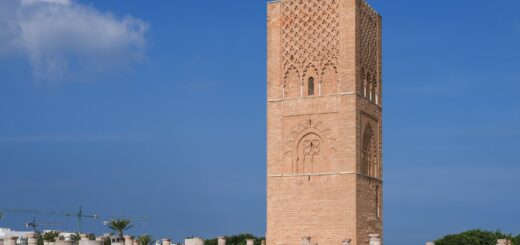
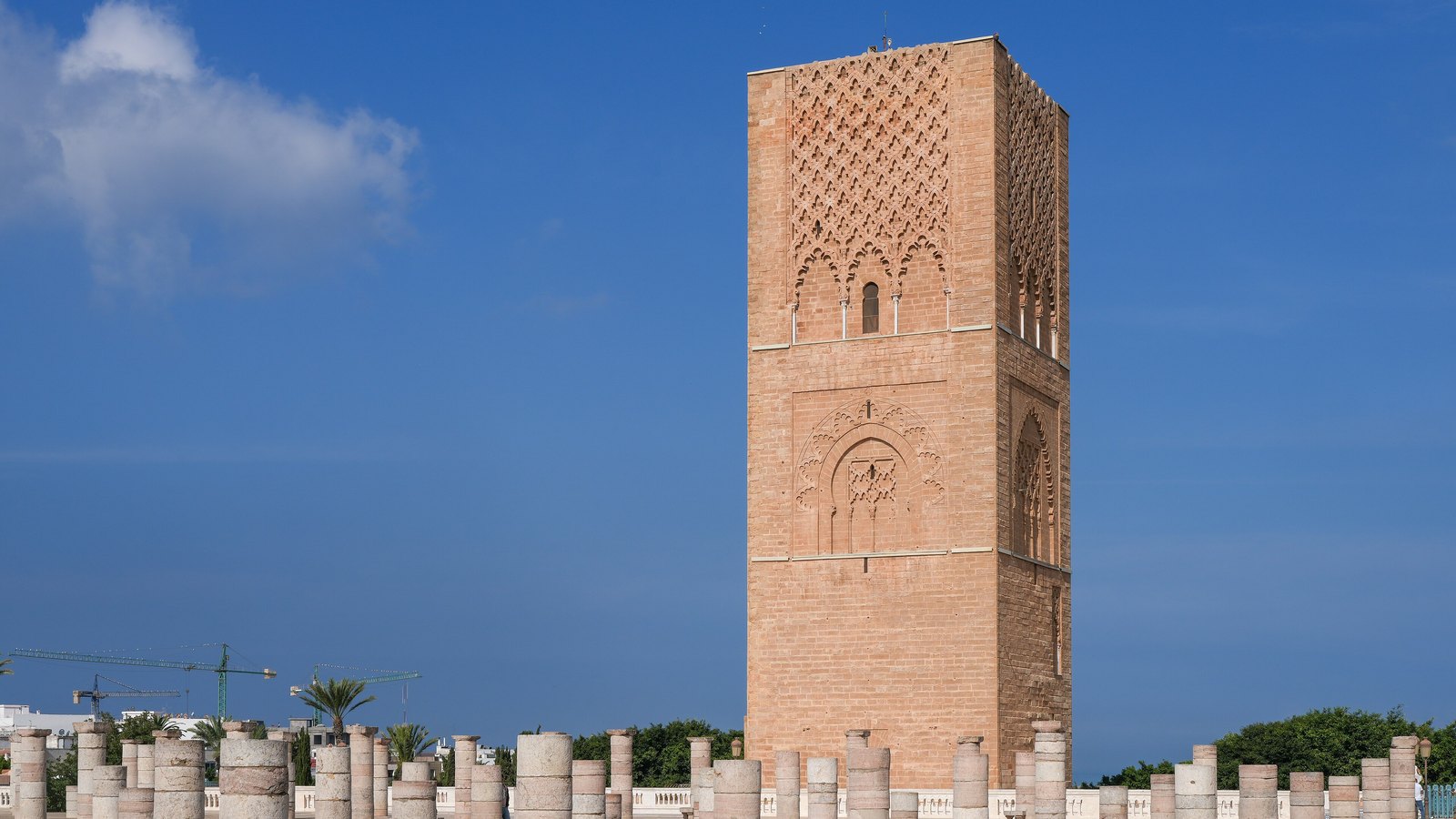
Header photo: Hassan Tower Columns Rabat Nov25 A7CR 08839 by This Photo was taken by Timothy A. Gonsalves. Feel free to use my photos, but pl, CC BY-SA 4.0, via Wikimedia Commons, cropped; this crop is released under the same licence.
We use AI in our daily operations; posts are reviewed by people before publishing; automated/generated posts are marked as such where needed.