Oracle beat every number on Thursday. By Friday afternoon, its stock was down.
Oracle’s first-quarter results, released Thursday, beat Wall Street on every headline number that usually moves a stock. Earnings per share came in at $1.92 against a $1.74 forecast — a 10% beat. Revenue hit $19.35 billion against a $19.14 billion forecast, up 30% from a year earlier. In early trading Friday, investors reacted the way you’d expect: Oracle’s shares jumped as much as 6%.
By Friday afternoon, that gain was gone, and the stock was trading roughly 1% below where it started. A real earnings beat had turned into a loss inside a single trading session — and the reason says more about how markets actually price a company than the beat itself does.
What flipped the mood: the balance sheet, not the growth numbers. Oracle is carrying $125 billion in total debt. Its free cash flow — the actual cash left over after running the business and paying for its investments — was negative $5.4 billion for the quarter. And the number driving both of those: capital expenditure, the money Oracle is spending to build out data centers for its cloud and AI business, rose to $28.5 billion from $8.5 billion a year earlier. That’s more than a threefold increase in spending in twelve months. Sources following the stock noted Oracle now sits with a weaker cash position and a lower credit rating than the much larger “hyperscaler” cloud companies — Microsoft, Amazon, Google — it’s trying to compete against in the same data-center buildout race.
Wall Street’s own targets tell a different story than Friday’s trading did. Analyst ratings on Oracle stayed firmly positive through all of this: 21 buy ratings against 4 holds, with an average 12-month target from analysts of $257.76 — implying nearly 69% upside from where the stock has been trading. That’s the striking part. The people who write formal research notes on Oracle are, on paper, more bullish on the stock than the people trading it were on Friday afternoon. A genuine beat on revenue and earnings, paired with genuine, measurable financial strain from a spending ramp that size, and the two readings of the same company didn’t agree with each other in real time.
Why this matters beyond one company’s stock price. Oracle isn’t spending $28.5 billion a year to keep the lights on — it’s spending it to compete for AI cloud infrastructure business against companies with much deeper pockets. That bet might pay off; the growth numbers this quarter suggest demand for what Oracle is building is real. But “the growth is real” and “the way we’re paying for the growth is sustainable” are two separate questions, and Friday’s trading is a reminder that markets can answer them differently within the same afternoon. It’s also not a new pattern for Oracle specifically: the company had a similar setup in June 2026, when an earnings beat still led to the stock falling on the same spending-discipline concerns. Twice in three months is the beginning of a pattern, not a one-off.
Sources: Stock reversal, EPS/revenue beat, debt/cash-flow/capex figures, analyst ratings and target for the shares: Oracle Stock (ORCL) Erases Earlier Gains and Falls After Earnings — TipRanks.
Corroborating EPS/revenue figures: Oracle Q1 Earnings: Cloud Infrastructure Revenue Up 121% — StockTitan.
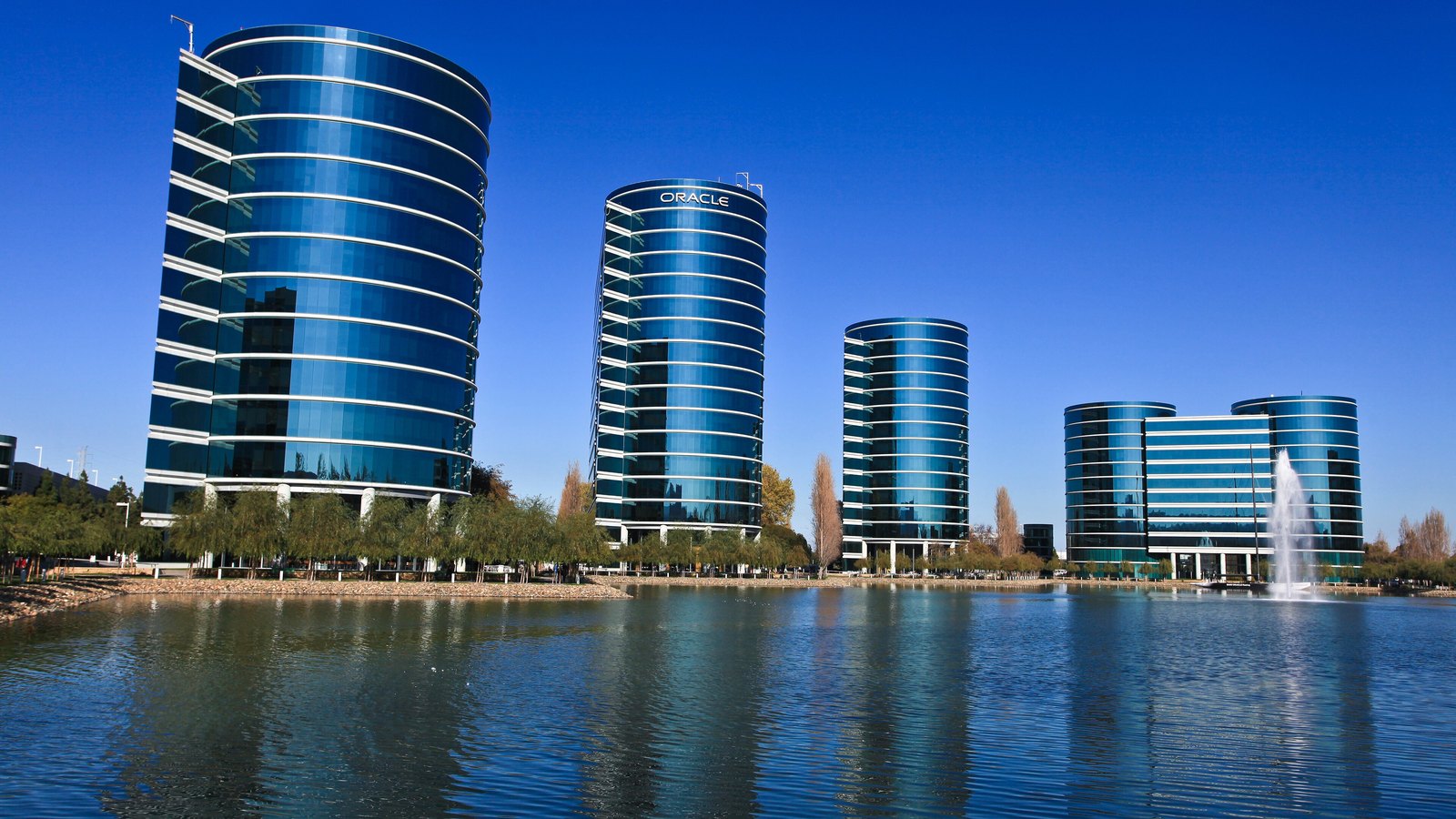
Header photo: Oracle Headquarters Redwood Shores by Håkan Dahlström, CC BY 2.0, via Wikimedia Commons, cropped.
We use AI in our daily operations; posts are reviewed by people before publishing; automated/generated posts are marked as such where needed.