Solar and batteries are now most of what America is adding to its power grid
For most of the last century, “adding power” in the United States meant building something that burns fuel — a coal plant, then increasingly a natural-gas plant. That era is quietly ending, and 2026 is the year the numbers make it undeniable. According to the U.S. Energy Information Administration, solar panels and batteries together now account for the overwhelming majority of the new capacity being added to the American grid.
The headline number
The EIA’s April 2026 Electric Power Monthly projects about 86 gigawatts of new utility-scale capacity coming online in the U.S. this year. Of that, solar and battery storage make up nearly 80%. That’s not a niche — it’s the main event. The grid isn’t slowly experimenting with renewables at the margins any more; renewables plus storage are the build-out.
Break it down and the scale is striking:
- Utility-scale solar: 43.4 GW planned for 2026 — a roughly 60% jump over what was installed in 2025. Solar alone is the single largest source of new capacity.
- Utility-scale batteries: 24 GW planned this year, up sharply from about 15 GW added last year. Total U.S. battery storage is projected to climb from 44.6 GW toward more than 67 GW by early 2027.
- Natural gas, meanwhile, is projected to slip below 39% of capacity — still a major player, but a shrinking share of the new build.
Why solar and storage travel together
The two technologies growing fastest are the ones that fix each other’s weakness. Solar’s obvious problem is that it stops producing when the sun goes down or clouds roll in. A battery solves exactly that: it soaks up the midday flood of cheap solar power and releases it in the evening when demand peaks and the panels have gone quiet.
That pairing is why the growth of batteries and solar is happening in lockstep rather than as separate stories. Increasingly the standard project isn’t “a solar farm” or “a battery,” but a hybrid site that combines both, behaving on the grid more like a controllable power plant than an intermittent one. The battery turns a weather-dependent resource into something a grid operator can actually schedule.
What’s really driving it
It’s tempting to read this purely as a climate story, but the more durable driver is boringly economic: solar and batteries have gotten cheap and fast to build. A gas plant is a multi-year construction project with fuel-price risk baked in for decades. A solar-plus-storage project can be permitted and stood up far faster, with no fuel bill at all once it’s running. When the cheapest and quickest new capacity also happens to be the cleanest, the build-out follows the money — and the money is pointing the same direction as the emissions math.
There are real caveats worth keeping honest about. “Capacity” in gigawatts is not the same as “energy generated”: solar’s capacity factor is lower than a gas plant’s, so 43 GW of solar produces less electricity than 43 GW of gas would over a year. And today’s batteries mostly shift power by hours, not days — they smooth the daily cycle, they don’t yet cover a week-long stretch of cloudy, windless weather. Solar and wind combined are still only expected to pass 20% of the total U.S. electricity mix by early 2027. So this is a decisive shift in what’s being built, not yet in what’s already running.
The bottom line
Still, the direction is no longer ambiguous. When four out of every five gigawatts a country adds to its grid in a year are solar and batteries, the question has changed. It’s no longer “will renewables scale?” — they are, at record pace — but “how fast can the grid, the storage, and the transmission lines keep up with them?” For 2026, the build-out has already answered the first question. The second one is the story of the next few years.
Sources: The 2026 US figures — ~86 GW total new utility-scale capacity, solar + storage nearly 80% of additions, 43.4 GW solar (+60% over 2025), 24 GW new storage (up from ~15 GW), total battery capacity 44.6 GW rising past 67 GW by early 2027, natural gas share slipping below 39%, and solar+wind passing 20% of the mix by early 2027 — attributed to the EIA’s April 2026 Electric Power Monthly: Solar and storage to drive 86 GW US capacity surge in 2026 — ESS News.
The underlying data source: Electric Power Monthly — U.S. Energy Information Administration.
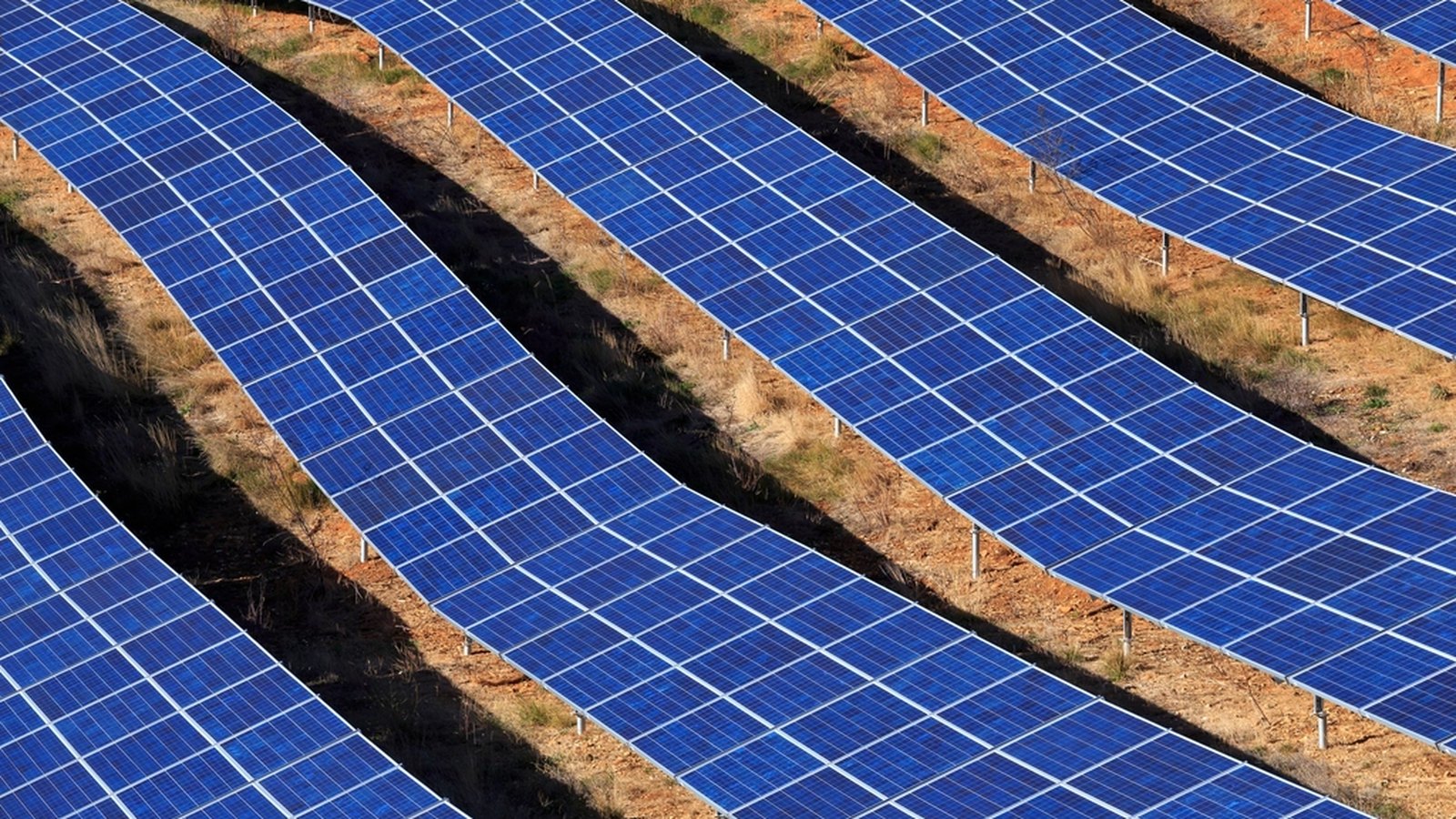
Header photo: Solar panels by unknown author, CC0, via Rawpixel, cropped.
We use AI in our daily operations; posts are reviewed by people before publishing; automated/generated posts are marked as such where needed.