When the queen dies, hidden leaders emerge inside a bumble-bee colony
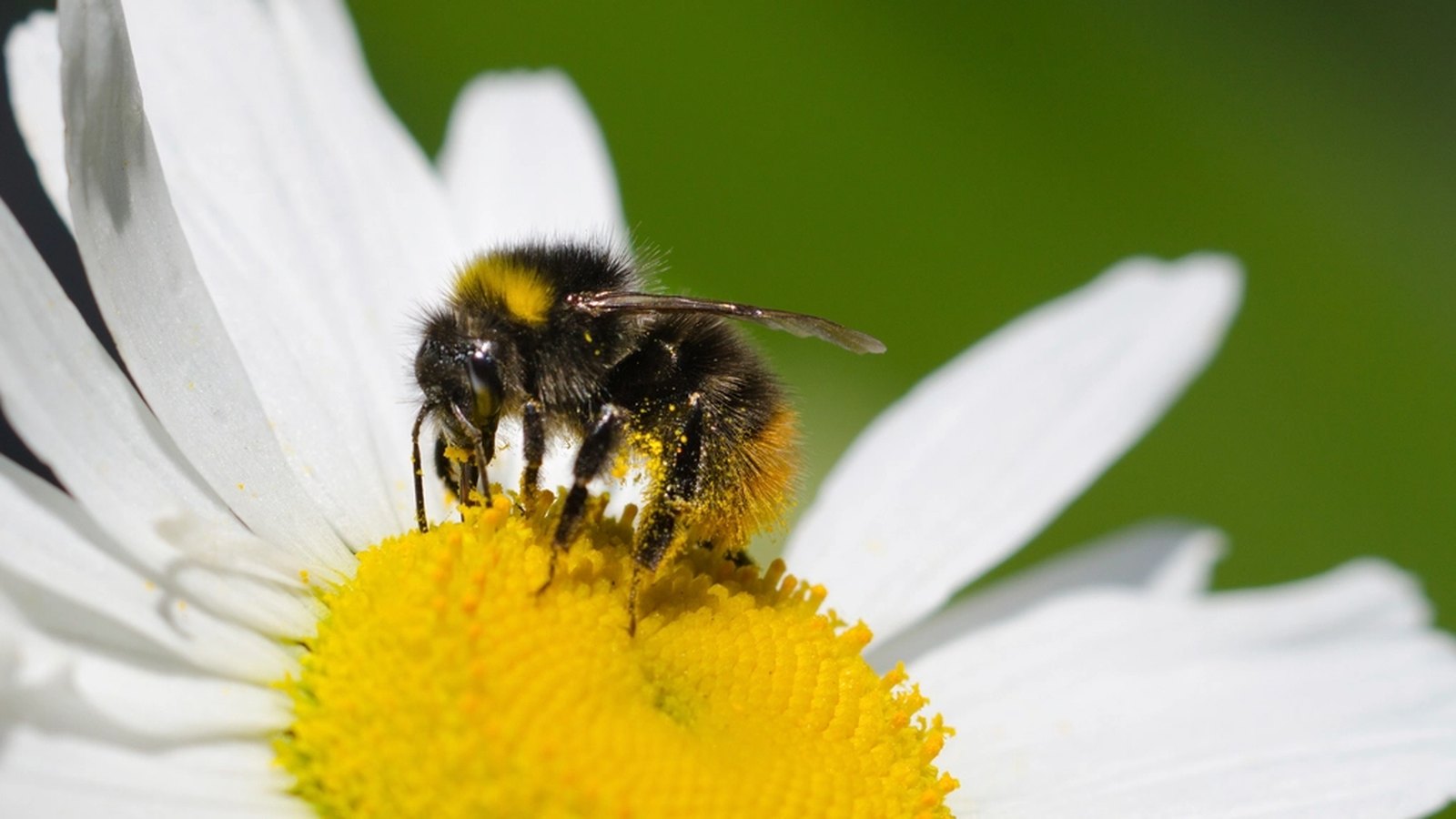
A bumble-bee colony looks like the ultimate top-down society: one queen, hundreds of workers, everyone in their place. But a new study that tracked bees in extraordinary detail found something more surprising underneath that order — the workers are hiding leaders, and it takes the queen’s death to reveal them.
Watching 80 million tiny interactions
The hard part of studying a colony’s social life is that it’s invisible to the naked eye — hundreds of near-identical insects moving constantly in the dark. So researchers at Princeton’s Kocher lab used automated multi-animal pose tracking: computer vision that follows every individual bee at once and logs who interacts with whom. To make the comparison clean, they took bees from the same source colonies and split them into two conditions — one with a queen (“queenright”) and one without (“queenless”) — and then quantified over 80 million social interactions between them.
That scale matters. With numbers like these you’re no longer telling anecdotes about a few bees; you’re mapping the entire social network of a colony and watching how its shape changes.
The queen is a hub, not a boss
The first finding upends the intuitive picture. In a queenright colony, the network was highly centralized around the queen — but not because she was issuing orders. The data show the queen mostly received interactions rather than initiating them. She’s less a commander barking instructions and more a hub that everything orients around, the fixed point a centralized network organizes itself against.
Then the researchers removed that fixed point.
Hidden influencers step forward
In the queenless colonies, worker interaction rates went up, and something latent surfaced: a subset of workers became highly influential — moving more, sitting at the center of the social network, and developing elevated reproductive activity. Crucially, these standout individuals were essentially invisible when the queen was present. Their capacity to lead was there all along; the queen’s presence simply kept it masked.
As these influencers emerged, the whole architecture of the colony flipped — from a centralized network organized around one individual to a decentralized, more distributed one spread across several. And counterintuitively, the decentralized version was measured as more efficient overall, not less. Losing the single hub didn’t make the colony fall apart; it reorganized into a different, workable shape.
Why this is more than a bee story
The headline result is a clean example of a deep idea in biology: individual potential can stay hidden until the social context changes. The workers didn’t acquire new abilities when the queen died — they revealed abilities that were suppressed. The queen’s presence was constraining “latent worker variation,” and lifting that constraint let individual differences scale all the way up to reorganize the group.
That pattern — where a hierarchy quietly caps what its members express, and removing the top of the hierarchy unmasks capacity nobody knew was there — shows up far beyond insects. It’s a useful reminder that “who’s a leader” can be as much about the structure people are embedded in as about the individuals themselves. Change the structure, and a different set of leaders can appear.
One honest caveat
This work is currently a preprint posted to bioRxiv — meaning it has been shared publicly by the researchers but has not yet completed formal peer review. The tracking method and the scale of the dataset are genuinely impressive, and the findings are internally consistent, but the usual scientific caution applies: a preprint is a strong signal, not a final verdict, until other scientists have scrutinized it. Worth watching where it lands.
Either way, it’s a striking look inside a society we usually flatten into “queen and her workers” — and a reminder that even there, the org chart isn’t the whole story.
Sources: The multi-animal pose-tracking method, the >80 million interactions, the queenright-vs-queenless comparison, the queen receiving rather than initiating interactions, the emergence of highly influential workers with elevated reproductive activity, the centralized→decentralized/more-efficient network shift, and the “latent worker variation” conclusion (bioRxiv preprint, Kocher lab, Princeton): Queen loss unmasks cryptic worker influence and decentralizes the bumble bee social network — bioRxiv.
Project/author page with the same study and figures: Queen loss unmasks cryptic worker influence — Kocher lab (damelo.net).
Header photo: Free bumblebee flower image by unknown author, CC0, via Rawpixel, cropped.
We use AI in our daily operations; posts are reviewed by people before publishing; automated/generated posts are marked as such where needed.