Ice Age carvers used mammoth tusks’ own patterns to shape their art
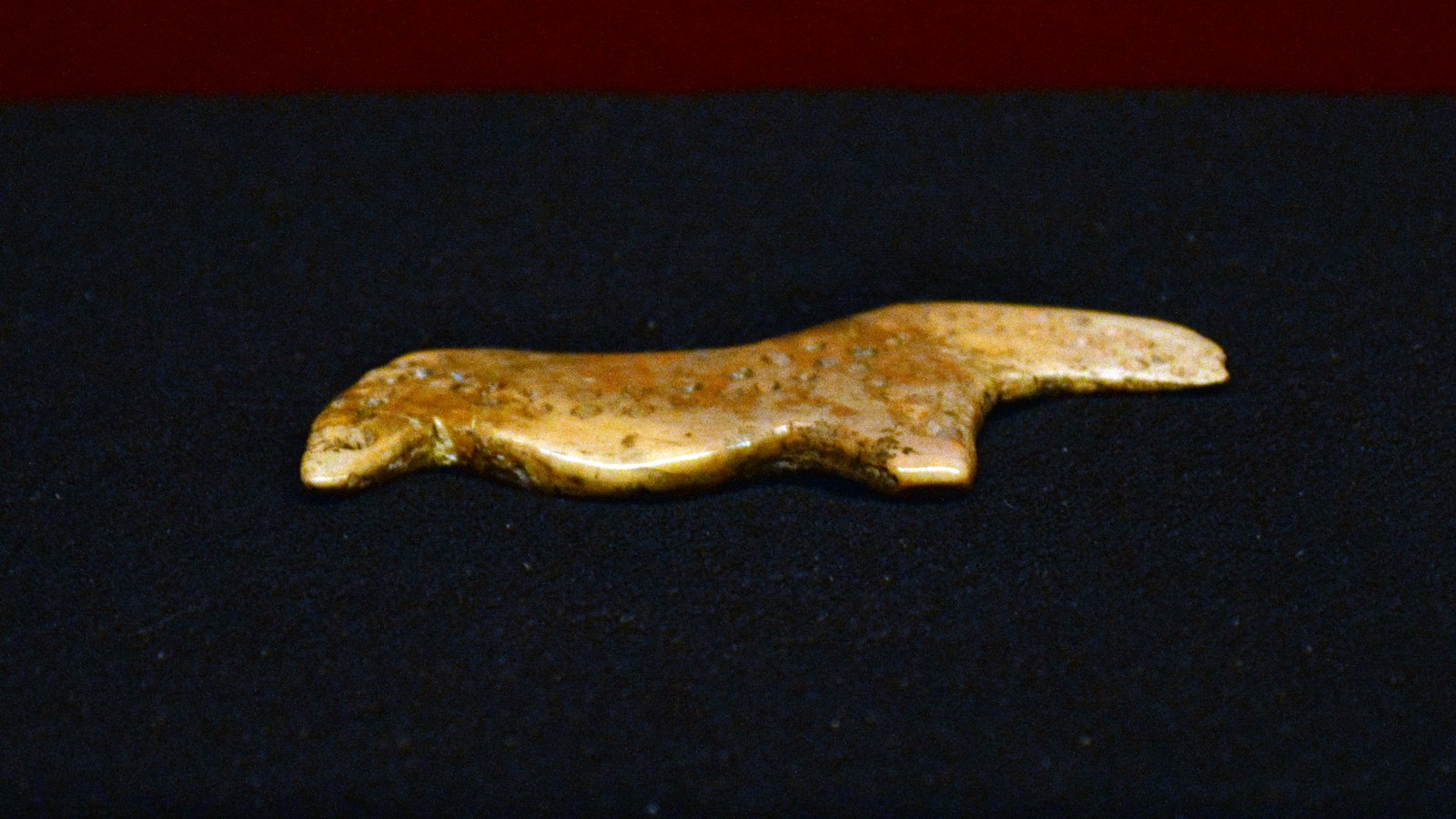
When an artist 18,000 years ago sat down to carve a figurine from a piece of mammoth ivory, they were not working with a blank canvas. Mammoth tusks carry their own hidden architecture — faint, curving growth lines laid down over the animal’s life. A new study of famous Ice Age figurines from Ukraine suggests that the carvers not only noticed those natural patterns but deliberately built their designs around them, letting the material itself guide the art.
The research, published in the Nature partner journal npj Heritage Science in 2026, was led by Dr. Aimée Little of the University of York’s Department of Archaeology, working with a collaboration that included the University of Stavanger, the National Museum of the History of Ukraine and the Leibniz Centre for Archaeology, among others. The team examined the 18 celebrated “Venus” figurines from Mizyn, a Palaeolithic campsite in northern Ukraine known for its dwellings built from mammoth bones. The figurines, carved from mammoth ivory, date to roughly 18,000 years ago.
What the researchers found running through the figurines’ intricate engraved surfaces were Schreger and Owen lines — the natural growth rings and cross-hatched patterns that form inside a mammoth’s tusk as it grows. Rather than carving across or ignoring this internal structure, the Ice Age artists appear to have studied the ivory closely and incorporated those lines into their surface designs, aligning parts of the engraving with the material’s own geometry. The art and the medium, in other words, were worked together.
To see this, the team could not rely on handling the objects freely. The figurines are held at the National Museum of the History of Ukraine in Kyiv, and access has been constrained by Russia’s invasion. Urgent digital-preservation work — led in part by the Ukrainian NGO Archaïc — produced the high-resolution records the study depended on. From those, the researchers built 3D digital models and used microscopic analysis to read the engravings in fine detail, measuring 97 individual engraved lines. The tool marks told their own story: the cross-sections suggest the carvers frequently swapped flint blades and worked different parts of each figure in different ways, a level of deliberate technique that fits the idea of artists responding carefully to their material.
The interpretation the team draws is measured. Dr. Little describes identifying “visual evidence of how mammoths were integrated into artistic traditions” as “a genuine breakthrough” — not just that mammoths were a subject of Ice Age art, but that the animal’s physical substance shaped how that art was made. A collaborator, Dr. Needham, framed a broader point: that these Eastern European artists “forged their own independent artistic path,” rather than following a single line of development radiating out from Western Europe, where much of the best-known Ice Age art has been found.
It is worth keeping the limits in view. The study does not claim to have decoded why these figurines were made; plenty of competing theories about their spiritual or ritual purpose remain, and the researchers are careful to say their findings challenge the assumption of a single, linear evolution of art more than they pin down any individual carver’s intentions. Reading intent into marks left 18,000 years ago is always an inference. What the physical evidence does show, clearly, is a sophisticated dialogue between maker and material — the kind of attentiveness to a medium’s natural grain that any woodworker or sculptor would recognise today.
That is the quiet power of the finding. It pushes back against the tidy story in which “real” art emerges in one place and spreads outward, and it credits Ice Age people with something very human: the habit of looking hard at a raw material and letting what is already there help decide what to make. And it does so on the basis of objects that are, right now, physically out of reach — preserved as data so that even a war cannot erase what they can still teach us.
Sources: The *npj Heritage Science* study (2026), lead researcher Dr. Aimée Little (University of York) with a multi-institution team including the National Museum of the History of Ukraine, the 18 mammoth-ivory “Venus” figurines from Mizyn (~18,000 years old), the deliberate use of Schreger and Owen growth lines, the 3D-model and microscopic methods (97 engravings measured, flint-blade tool marks), the researcher quotes, and the wartime digital-preservation context: Ice Age carvers used mammoth tusk patterns to create unique art — University of York.
Corroborating coverage with the same study, site and findings: Ice Age artists took cues from ivory itself, 18,000-year-old figurines from Ukraine suggest — Sci.News.
Header photo: Figurine – Sungir – Vladimir Palaty by Лапоть, CC0, via Wikimedia Commons, cropped.
We use AI in our daily operations; posts are reviewed by people before publishing; automated/generated posts are marked as such where needed.