School enrolment in Romania for foreign children in 2026: rights, steps and documents
Foreign children who live legally in Romania can attend state kindergarten and school, and compulsory state education is free of tuition. Enrolment runs through the county school inspectorate. A child arriving from abroad usually joins a class as an audient (attending pupil) while the inspectorate checks the years studied abroad, and a state-funded Romanian initiation course is available. This guide sets out the rules in force on 3 November 2026. It is general information, not legal advice; rules change, so confirm the details with your county school inspectorate.
Who has the right to a state school place
Article 9 of the pre-university education law, Law 198/2023, guarantees equal access, without discrimination, to all levels of pre-university education for EU, EEA and Swiss citizens, minors who have applied for or received protection, foreign and stateless minors whose stay is officially recognised, non-EU citizens legally in Romania, and British citizens covered by the Brexit Withdrawal Agreement.
The law on foreigners says the same thing: foreign minors living in Romania have access to compulsory education “under the same conditions” as Romanian minors (OUG 194/2002, Article 132). The asylum law gives asylum-seeking minors and children under temporary protection the same access as Romanian children (Law 122/2006, Articles 17 and 133).
A missing Romanian personal number (CNP) is not a reason to refuse a child. Schools must enrol children who have no CNP (Article 105(11) of Law 198/2023). Families arriving to join a worker or student can find the residence side in our guide to family reunification in Romania in 2026.
Is education free in Romania?
Yes, for compulsory state education: Article 135(2) of Law 198/2023 says it is free, although fees may be charged for some levels or forms of study where the law allows. Article 106(1)(a) lists the right to “quality and free” education in the state system. The same law also provides:
- Textbooks: pupils in state schools receive free textbooks (Article 93(4)). From the 2027-2028 school year an amendment (Law 56/2026) adds workbooks and other teaching materials.
- Transport: pupils get free local public transport and free second-class rail travel “under the conditions of the law” (Article 83(1)).
- Scholarships: foreign pupils can receive scholarships. The conditions for schooling foreign pupils, including funding, are set by government decision (Article 108^1(11)-(13)).
Compulsory education and school ages
Under Article 13(1), compulsory education covers kindergarten (învățământ preșcolar, ages 3-6), primary school (the preparatory class, clasa pregătitoare, plus grades I-IV), lower secondary (grades V-VIII) and upper secondary school (liceu, usually 4 years) (Article 15). The youngest kindergarten group (grupa mică) becomes compulsory only from the 2030-2031 school year (Article 248(3)).
A child enters the preparatory class if they turn 6 by 31 August of the enrolment year. Children who turn 6 between 1 September and 31 December can enter on the parents’ written request and a recommendation that their development is suitable (Article 31(2) and (4)). Parents must make sure their child attends throughout compulsory education, and failing to do so is a contravention (Article 14(1)). Full-time attendance can stop at 18 (Framework Regulation, Article 124).
Who handles enrolment: the school inspectorate
The office that matters is the county school inspectorate (inspectoratul școlar județean, ISJ), or ISMB in Bucharest. Law 198/2023 reorganises the inspectorates into county directorates (DJIP/DMBIP) from a date set by ministerial order (Articles 116 and 119), but 2026 ministry orders still address the inspectorates, so expect the ISJ name. The recognition centre CNRED keeps a list of inspectorate contacts for every county.
Order 6127/2022 covers minors who have a right of stay or international protection (or have applied for it), and EU, EEA and Swiss minors. Article 1(2) names foreign minors who hold a right of stay in Romania, including temporary protection, and a residence permit attests a right of stay (OUG 194/2002, Article 108). Under the order, one parent files the enrolment request with the inspectorate. The inspectorate picks the school, where relevant together with the parents and the General Inspectorate for Immigration (IGI), and takes school catchment areas into account (Articles 2-3).
Joining a class as an audient
A pupil with school records from abroad gains full pupil status after the inspectorate grants equivalence, at the level of the last grade completed. Until then the child is enrolled as an audient, whatever the time of year the parents ask. The equivalence file must reach the inspectorate within 30 days of the audient enrolment (Framework Regulation, Article 125(1)-(2)).
The school director decides the grade, on the report of a school commission that includes a psychologist or counsellor and considers the child’s age, development, the parents’ view and a short oral assessment. If parents disagree with the commission’s recommendation, the child goes into the grade the parents choose, on their signed responsibility. Within 15 days of the equivalence certificate arriving, the child moves into the class register with all grades and absences carried over (Article 125(5)-(8)).
For children covered by Order 6127/2022, the placement commission meets within 3 days of the child arriving at the school and decides within 5 days. The child is not placed in a grade that ends with an exam for entry to the next cycle (Article 6).
Equivalence of study periods completed abroad
The current procedure is Ministry of Education Order 7303/2024 (Official Gazette no. 1082, 30 October 2024), which CNRED lists as amended. It names Romanian, EU, EEA and Swiss citizens and protection seekers, while the Framework Regulation applies equivalence to pupils “regardless of citizenship or status” (Article 125(1)). The file contains:
- an application
- the Romanian transcript, for any grades completed in Romania
- school documents showing the level, duration and completion of each grade abroad
- the pupil’s identity document
- where needed, a certificate from the issuing country confirming the records are authentic
Each inspectorate decides in its own procedure whether it wants originals, copies, or authorised and/or legalised translations. No fee is charged for evaluating the file (Article 2). The file can be filed in person or online, a commission of at least 3 inspectorate staff reviews it, and the deadline is 30 calendar days from a complete file. The resulting certificate is valid for enrolment in any Romanian school (Articles 3-5).
As an example of local rules, the Botoșani inspectorate’s procedure accepts copies of records in English, French, Spanish or Italian. It asks for a legalised Romanian translation of records in other languages, and its commission can still ask for a translation of English or Italian records if they are unclear. The national order does not itself mention an apostille. If your inspectorate asks for authentication, see our guide to apostille in Romania. A finished secondary-school diploma is a different procedure, handled by the ministry. See getting a foreign diploma recognised in Romania.
No school records? The parents file a written request with the school. The inspector general sets up an examination commission within 10 days, and the child is tested within 20 days. The tests cover Romanian language and communication, mathematics and science, and “man and society” (religion excluded), one year at a time, starting with the last year completed abroad (Framework Regulation, Article 125(10)-(12)). For children under Order 6127/2022, parents can instead choose a simplified procedure built around a general mathematics test (Articles 13-14).
The Romanian initiation course
Children covered by Order 6127/2022 who do not speak Romanian have a right to a Romanian initiation course (curs de inițiere în limba română) (Article 19). The order sets out how it works:
- Applying: at the inspectorate or an IGI regional centre, with the child’s identity document. The inspectorate names the host school within 30 days (Article 20).
- Hours: 6 a week, at least 216 over 36 weeks, in modules at CEFR levels A1, A2 and B1, with age groups 6-10, 11-14 and 15-18 (Articles 24-25).
- Cost: textbooks are free and the Ministry of Education budget pays for the course (Articles 27 and 32).
- Certificate: an end-of-course exam leads to a Romanian language certificate (Article 28).
Children who have records abroad and take the course are formally enrolled in their equivalent grade once they finish the course and get the certificate. Parents may decline the course in writing (Articles 8-9). Under the asylum law, asylum-seeking minors get a free intensive course within 3 months of applying, and refugee and subsidiary-protection minors get a free one-year course (Law 122/2006, Articles 18 and 20^2).
The 5,217-lei Romanian course set by Order 4649/2026 is for adults, not schoolchildren. Children who did not attend school in Romania for the previous two years can also ask the inspectorate for an “accommodation group”. It offers 2 hours a week of Romanian language, history and culture outside school hours (Framework Regulation, Annex 3).
Kindergarten and preparatory-class calendars
Each year the ministry approves, by order published in the Official Gazette and on legislatie.just.ro, one calendar for kindergarten and one for primary enrolment. For 2026-2027:
- Preparatory class (Order 3334/2026): applications 31 March-6 May 2026, a second stage from 25 May, final lists on 16 June, remaining cases settled by the inspectorate on 1-4 September.
- Kindergarten (Order 3707/2026): re-enrolment 18-22 May, stage I 25 May-18 June, stage II 22 June-9 July, and an adjustment stage through the inspectorate on 17-27 August 2026.
Both calendars are now closed. As of 3 November 2026 we found no 2027-2028 calendar. Families arriving during the year use the audient and equivalence route described above (Framework Regulation, Article 126(2)). For the preparatory class, the primary enrolment methodology asks for copies of the parent’s identity document and the child’s birth certificate, certified by the school against the originals; applications can go online, by email, by post or in person, and “domicile” includes residence (Articles 2, 13 and 14).
Minority languages, English and private schools
Pre-university education is taught in Romanian, in national minority languages, in Romanian sign language and in “languages of international circulation” (Law 198/2023, Article 1). In minority-language schools, every subject except Romanian language and literature is taught in the mother tongue (Article 60(1)). We found no official list of state schools teaching in English.
Private schools teaching a foreign curriculum must be in the ARACIIP special register, renewed every 5 years (Article 246(3)), and their studies go through the same equivalence procedure.
Checklist
- Contact the county school inspectorate (ISMB in Bucharest) and file the enrolment request.
- Bring the child’s passport or birth certificate, your own identity document and the child’s school records from abroad.
- Ask the inspectorate which translations or authentications it wants.
- Once the child is enrolled as an audient, file the equivalence file within 30 days.
- Apply for the Romanian initiation course at the same time if your child needs it.
- Keep the equivalence certificate and the language certificate.
Sources: Access rights, free state education, textbooks, transport, scholarships, compulsory levels and ages, the inspectorate reorganisation, languages, foreign-curriculum register (Articles 1, 9, 13-15, 31, 60, 83, 93, 105, 106, 108^1, 116, 119, 135, 246, 248): Legea nr. 198/2023 a invatamantului preuniversitar, forma consolidata – Portal Legislativ (Ministerul Justitiei), version of 28 September 2026.
Audient enrolment, placement, no-records examination, accommodation groups (Articles 124-126, Annex 3): Regulamentul-cadru de organizare si functionare a unitatilor de invatamant preuniversitar (Ordinul 5726/2024), forma consolidata – Portal Legislativ, version of 7 July 2026.
Equivalence file, no fee, 30-day deadline, certificate: Ordinul ministrului educatiei nr. 7303/2024, Monitorul Oficial nr. 1082/30.10.2024 – CNRED.
Scope, enrolment request, placement commission, simplified test, Romanian initiation course (Articles 1-33): Metodologia aprobata prin Ordinul nr. 6127/2022 – Portal Legislativ (Ministerul Justitiei).
Foreign minors’ access to compulsory education, residence permit as proof of the right of stay (Articles 108, 132): Ordonanta de urgenta nr. 194/2002, forma consolidata – Portal Legislativ (Ministerul Justitiei).
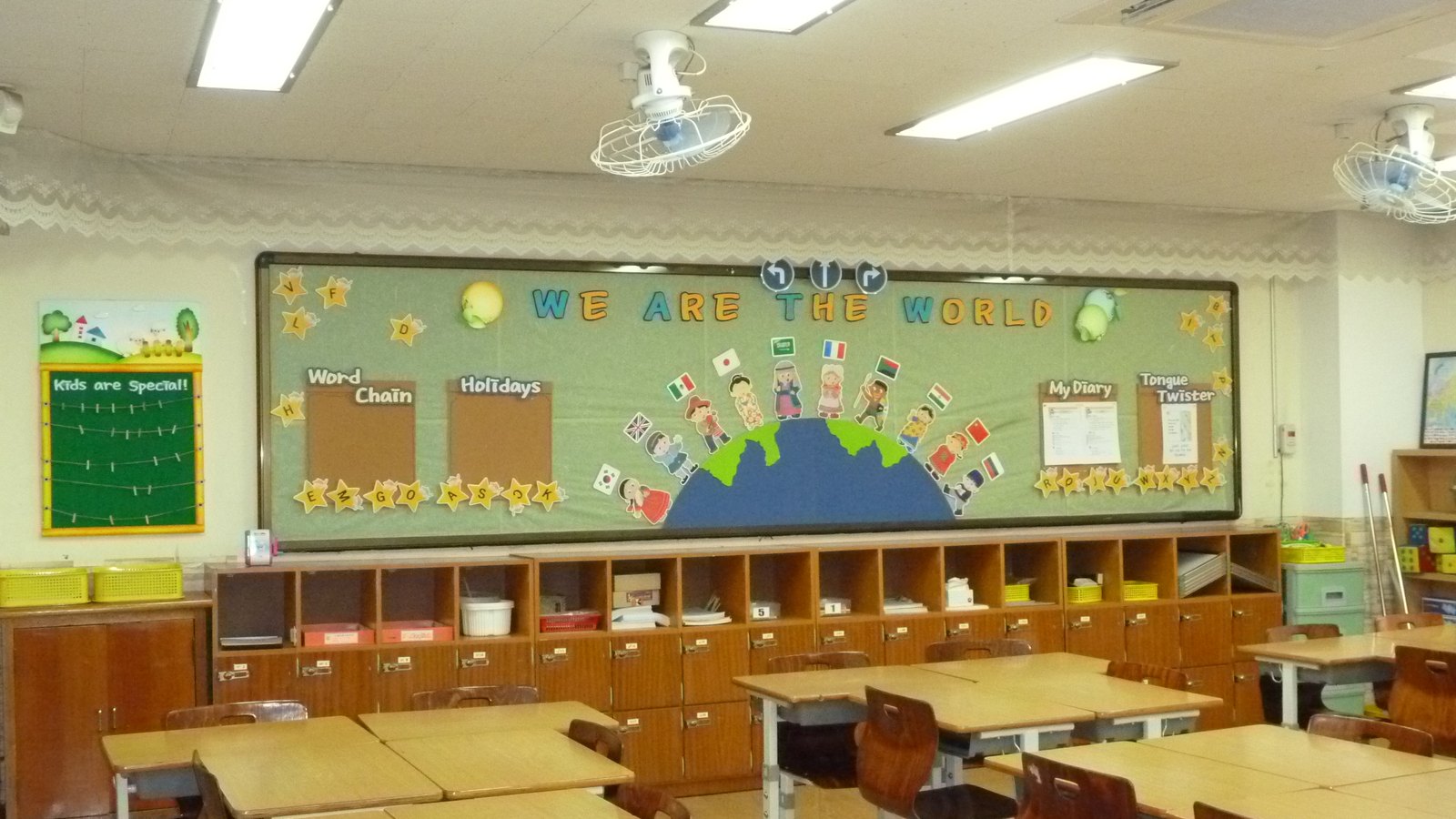
Header photo: Classroom in the U.S by Marie from Malang, East Java, Indonesia, CC BY-SA 2.0, via Wikimedia Commons, cropped; this crop is released under the same licence.
We use AI in our daily operations; posts are reviewed by people before publishing; automated/generated posts are marked as such where needed.