Sick leave in Romania in 2026: who pays, how much, and how the medical certificate works
Sick pay in Romania is a health insurance benefit set by Emergency Ordinance (OUG) 158/2005. In 2026 ordinary illness pays 55%, 65% or 75% of your average gross income depending on how long the illness episode lasts. For certificates issued between 1 February 2026 and 31 December 2027, the first day of each episode is not paid, and employers cover the next five. You normally need 6 months of insurance in the last 12, and the medical certificate must reach whoever pays you by the 5th of the following month. This guide is general information, not legal advice. Rules change, so confirm with your employer or your county health insurance house (casa de asigurări de sănătate, CAS).
The law, and what changed in 2025-2026
The basic law is OUG 158/2005 on health insurance leave and allowances (we read the version consolidated to 1 July 2026). The details sit in its application norms, approved by Order 15/2018/1.311/2017 of the health minister and the National Health Insurance House (CNAS) (norms, version consolidated to 24 July 2026).
Recent changes:
- New percentages from 1 August 2025. Law 141/2025 (art. IX and X) rewrote art. 17 of OUG 158/2005, so ordinary sick pay now depends on the length of the illness episode.
- One unpaid day from 1 February 2026. OUG 91/2025 (art. II) reduces the allowance by one day for certificates issued from 1 February 2026 to 31 December 2027. Law 64/2026 approved and amended it: the day is now deducted once per episode, and some patients are exempt.
- From 1 July 2026, OUG 89/2025 added art. 17(1^2), on how top-ups are declared when an episode continues into the next month and reaches a higher rate.
Who is entitled
Under art. 1 of OUG 158/2005, you are insured for sick leave while you have your domicile or residence in Romania and you:
- earn income under an employment contract (contract individual de muncă), a civil-service relationship or a secondment, including from a foreign employer outside the EU social security rules (art. 1(1)(A)-(B));
- or receive unemployment benefit (art. 1(1)(C)).
For employees, the right is financed by the employer’s work insurance contribution (contribuția asiguratorie pentru muncă) under the Fiscal Code (art. 3(1)).
Self-employed people and PFAs (persoană fizică autorizată) are not covered automatically. They must sign a sick leave insurance contract (contract de asigurare pentru concedii și indemnizații) with the CAS where they are registered, based on their health contribution (CASS) tax return (art. 1(2) and 6(6)). They then pay 1% of the insured monthly income written in the contract (art. 3(3)). That income must be between one and three national minimum gross base salaries (art. 5(1^1), as amended by OUG 8/2025).
Foreigners have the same rights as Romanians once they are insured here and live here. For the wider picture on health cover, see Health insurance in Romania for foreigners in 2026.
The minimum insurance period (*stagiu de asigurare*)
You need at least 6 months of insurance in the 12 months before the month of the leave (art. 7). If you recently moved, insurance periods from another EU or EEA country or Switzerland count when they are confirmed on the European form for totalising insurance periods issued by your previous insurer (art. 8(2)(d^1)). The same applies to countries with a social security agreement with Romania (art. 8(2)(d^2)).
No minimum period is needed for medical-surgical emergencies, certain burns, tuberculosis, group A infectious diseases, cancers (neoplazii), AIDS, and infectious diseases that require isolation (art. 9).
The payer also asks for a statement (adeverință) of your sick days in the last 12 or 24 months, except for emergencies, certain burns, group A infectious diseases, isolation and quarantine (art. 3^1).
How much you get
The base. For employees it is the average gross monthly income from the last 6 of the 12 months that make up your insurance period. It is capped at 12 national minimum gross salaries a month (art. 10(1)). For contract-insured people such as PFAs, the cap is 3 minimum gross base salaries (art. 10(3)). Only the working days in your leave are paid (art. 10(8)).
Ordinary illness or a non-work accident (art. 17(1), in force since 1 August 2025):
- 55% when the certificate covers up to 7 days;
- 65% when it covers 8 to 14 days;
- 75% when it covers more than 15 days. The law does not say which rate applies to exactly 15 days.
The percentage depends on the whole illness episode, not on each certificate. Under art. 30^1 of the norms, the days on the first (inițial) certificate and on any follow-up (în continuare) certificates are added together. The rate for that total then applies to every day of the episode.
Higher rates:
- 75% for the cardiovascular diseases on the special list (art. 17(1^1));
- 100% for tuberculosis, AIDS, cancers, group A infectious diseases, medical-surgical emergencies and certain burns, including recovery (art. 17(2)). These are gross amounts.
The unpaid first day, and who pays which days
The permanent rule is in art. 12: the employer pays days 1 to 5, then the National Single Health Insurance Fund (FNUASS) pays from day 6. FNUASS pays from day 1 for people insured by contract, such as PFAs, and for unemployment benefit recipients.
For certificates issued from 1 February 2026 to 31 December 2027, OUG 91/2025 art. II(1) changes this:
- day 1 is not paid (in practice the first working day, norms art. 78^4(4));
- the employer pays days 2 to 6;
- FNUASS pays from day 7, or from day 2 where it would have paid the whole allowance anyway (for example a PFA with a contract).
Since Law 64/2026, the day is deducted once per continuous illness episode, however many certificates you get (art. II(1^1)). The unpaid day still counts towards your insurance period (art. II(2)).
Exempt from the unpaid day (art. II(4)-(5)):
- maternity leave;
- leave to care for a family member with cancer;
- maternal-risk leave;
- patients enrolled in national health programmes;
- certificates issued while you are in hospital.
These exemptions apply from 1 June 2026, the first day of the month after Law 64/2026 took effect on 18 May 2026 (art. VI(4)). In the version we read, the exemption list does not include leave to care for a sick child, so the one-day deduction applies to it as well. In the consolidated texts we read, no Constitutional Court decision affecting the unpaid day is noted.
The medical certificate (*certificat de concediu medical*)
The certificate is the payment document (art. 36(1)). It is issued by a treating doctor who has a contract or agreement with the CAS: your family doctor, a specialist or a hospital doctor (art. 11). See how to register in Family doctor in Romania for foreigners.
Limits in the norms:
- A family doctor can give at most 7 calendar days per illness episode, in at least two stages, the first of at most 4 days (norms art. 20(1)).
- A specialist can extend it in stages of up to 30/31 days, within the overall limits of the law (art. 20(2) and 18 of the norms).
- Family doctors can give at most 28 days in total in the last year for one person. After that, only specialists issue certificates (art. 20(3)).
- A certificate is issued on the day of the consultation. It can be backdated by 24 hours only for a first certificate, and only if you could not get to the doctor (norms art. 9).
- When you leave hospital, the doctor can give 1 to 7 days, or up to 21 days with the head of department’s approval (norms art. 25(3)).
Since OUG 91/2025, CNAS can audit certificates, and one issued unlawfully is not paid (art. 51(2^5), as amended by Law 64/2026).
Deadlines and payment
- Hand in the certificate by the 5th of the month after the month the leave covers (art. 36(2); norms art. 60(1)).
- Your employer pays no later than with that month’s salary (art. 36(3)(a)).
- For people paid by the CAS, such as PFAs, the CAS pays by the 10th of the following month (art. 36(3)(c)). PFAs must attach the standard claim form (cerere-tip) to the certificate (norms art. 60(1)).
- The allowance can be claimed within 90 days of the date you became entitled to claim it (art. 40).
- A late, wrongly backdated or incomplete certificate can be refused (norms art. 71).
If you fall ill during annual leave or unpaid leave, that leave is interrupted and the unused days are rescheduled (art. 16(1)).
How long sick leave can last
For ordinary illness, the allowance is paid for at most 183 days in one year, counted from the first day of illness (art. 13(1)). From day 91, a specialist can extend the leave only with the approval of a social insurance medical expert (medic expert al asigurărilor sociale) (art. 13(2)).
Beyond 183 days, the medical expert can extend the leave by up to 90 more days if recovery is possible, or decide on reduced hours, return to work or invalidity retirement (art. 14).
Some illnesses have longer limits (art. 13(3)):
- certain cardiovascular diseases: 1 year within 2 years;
- AIDS and cancers: 1 year and 6 months within 2 years;
- tuberculosis and certain burns: the whole treatment period, until recovery.
Caring for a sick child
Insured parents can take paid leave to care for a sick child under 12. The limit is 18 for a child with a disability (for intercurrent illness) or a child with a serious illness on the official list (art. 26). One parent of your choice takes it and must meet the 6-month insurance condition (art. 27).
- Length: up to 45 calendar days a year per child. Infectious disease, a cast or other immobilisation, or surgery are exceptions, and then the specialist sets the length (art. 29(1)).
- Pay: 85% of the base (art. 30(1)), paid entirely by FNUASS (art. 26(2)).
- Quarantine or isolation: if a child under 18 is put in quarantine or isolation, a parent who is not under that measure gets 100% (art. 26(1^4) and 30(2)).
- Who issues it: a family doctor can give up to 14 days per illness, and a specialist or hospital doctor up to 30/31 days per certificate (norms art. 46).
For pregnancy and birth, see Maternity, paternity and parental leave in Romania in 2026.
Checklist
- Employees are insured through payroll; PFAs need a sick leave contract with their CAS and the 1% contribution.
- Count your insurance months (6 in the last 12); if you moved from another EU country, get the totalisation form.
- See a doctor who has a CAS contract on the first day. Backdating is limited to 24 hours.
- Hand it to your employer, or to the CAS if you are self-employed, by the 5th of the next month.
- For a 2026 episode, expect day 1 unpaid unless you are in hospital or in an exempt category.
Sources: Sick leave rights, insurance period, base, percentages, payers, durations, deadlines, child care (Articles 1-3^1, 7-17, 26-30^3, 36, 40, 51): OUG 158/2005 privind concediile și indemnizațiile de asigurări sociale de sănătate – legislatie.just.ro, version of 01 July 2026.
Certificate limits, episode recalculation, claim form, first-day calculation (Articles 9, 20, 25, 30^1, 46, 60, 71, 78^4): Normele de aplicare a OUG 158/2005, Ordinul 15/2018/1.311/2017 – legislatie.just.ro, version of 24 July 2026.
Unpaid first day, 1 February 2026 to 31 December 2027 (Article II): OUG 91/2025 privind stabilirea unor măsuri în cadrul sistemului de sănătate – legislatie.just.ro, version of 18 May 2026.
Once-per-episode deduction and exemptions (Articol unic, points 2-4): Legea 64/2026 pentru aprobarea OUG 91/2025 – legislatie.just.ro, version of 15 May 2026.
New percentages from 1 August 2025 (Articles IX, X): Legea 141/2025 privind unele măsuri fiscal-bugetare – legislatie.just.ro, version of 25 July 2025.
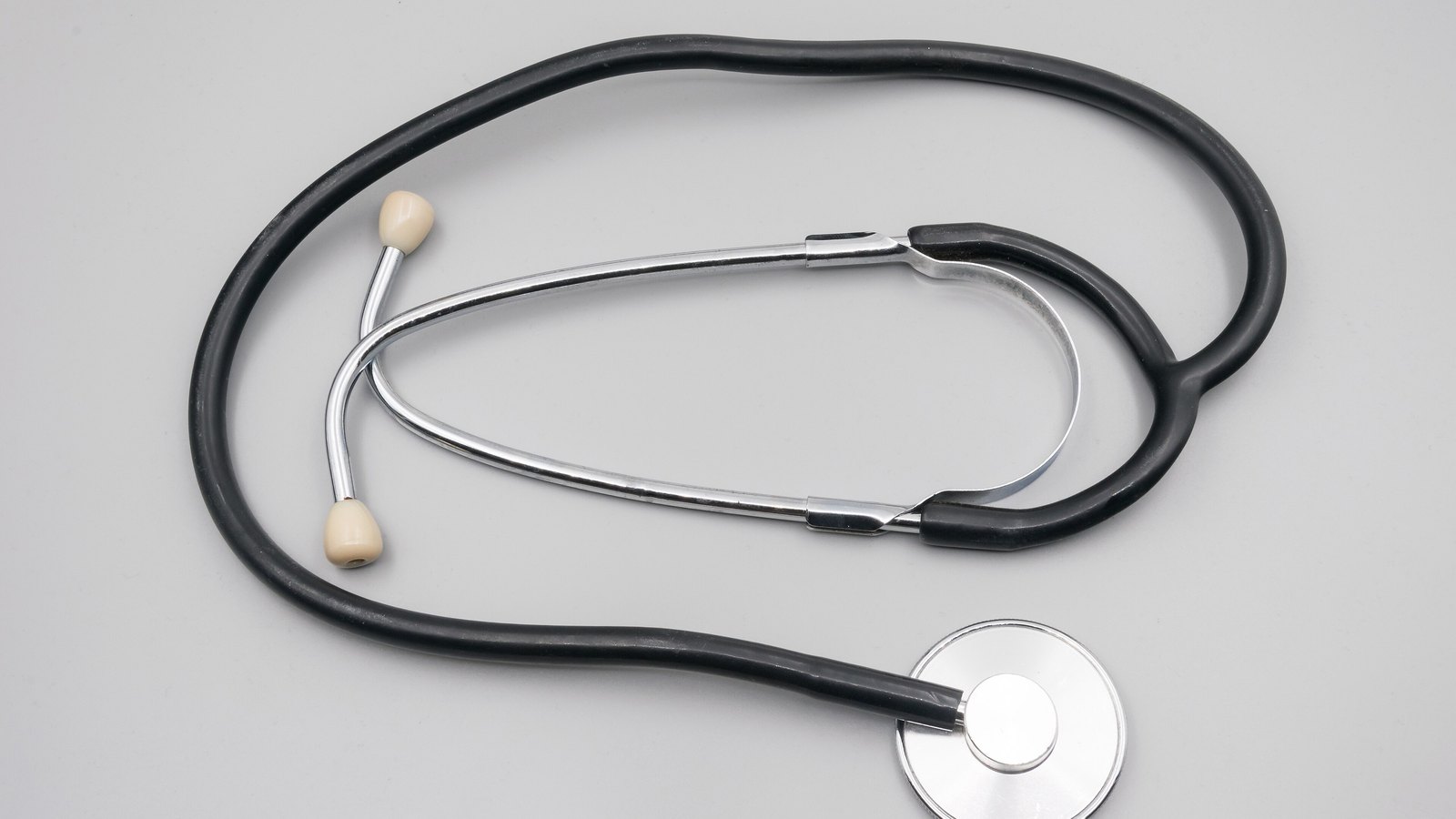
Header photo: 2023 Stetoskop by Jacek Halicki, CC BY-SA 4.0, via Wikimedia Commons, cropped; this crop is released under the same licence.
We use AI in our daily operations; posts are reviewed by people before publishing; automated/generated posts are marked as such where needed.