Utilities in Romania in 2026: electricity, gas and internet for foreigners
The energy and telecoms rules we read make no distinction by nationality. You sign an electricity or gas contract with a supplier of your choice, and changing supplier is free. The household electricity price cap ended in mid-2025, and gas has been under a new scheme since 1 April 2026 that runs until 31 March 2027. Internet and mobile contracts can run for at most 24 months at first. This guide is general information, not legal advice. Rules change, so confirm with the supplier, ANRE or ANCOM.
Supplier and distribution operator: who does what
Electricity and gas involve two companies:
- The supplier (furnizor) sells you the energy, signs the contract and sends the bill.
- The distribution operator (operator de distribuție, OD) owns the local network.
ANRE, the energy regulator, says the electricity network operator measures consumption and manages the meters and meter data. Most homes are connected to a regional distributor that holds a concession for its area. Distribuție Energie Electrică (Transilvania Nord) covers Cluj, for example, and Rețele Electrice România (Muntenia Sud) covers Bucharest, Ilfov and Giurgiu. The distributor depends on the address, so you cannot choose it. You can choose the supplier.
Starting a contract when you move in
ANRE’s electricity supply regulation (Order 5/2023, Article 15(1)) says an electricity contract is concluded on the basis of three things:
- your request, in writing or at a distance;
- a copy of your identity document;
- a declaration on your own responsibility stating your right to live there and in what capacity. Owner, heir, spouse and tenant (chiriaș) are among the listed options. The declaration also states that there is no housing dispute over the property.
In the version we read, the regulation does not ask for the lease itself or for the landlord’s written consent. Each supplier’s offer must still list the documents it needs (Article 9). Once it has a complete file, the supplier must conclude the contract within 5 working days. The new contract cannot start before the old one for the same home ends (Article 14(3)). A contract signed at a distance can be cancelled within 14 days (Article 15(7)).
Gas falls under a separate ANRE regulation (Order 29/2016). We did not check its document list, so ask the gas supplier for it. If the landlord keeps the contracts in their own name and charges you back, the lease sets out who pays what. Our guide to renting in Cluj-Napoca as a foreigner covers what to check in the lease.
Changing supplier: free, with a 24-hour switch
The Energy Law, Law 123/2012, gives electricity customers the right to switch within a maximum of 21 days. It also says that by 2026 at the latest, the technical switch must take 24 hours on any working day (Article 62(1)(h)). Households cannot be charged a switching fee (Article 62(5)). The exception is early termination of a fixed-term, fixed-price contract, where the supplier may charge a termination fee (Article 62(6)). For gas, suppliers must allow a free switch within 21 days. They must also send a final settlement bill within 42 days (Article 143(1)(g)).
ANRE’s page on changing supplier adds three points:
- Any fee for the switch is forbidden.
- The new supplier handles the switch, and supply continues while it happens.
- The technical switch takes 24 hours through POSF, ANRE’s online switching platform.
ANRE’s switching information line is 0374 554 265.
Current offers. ANRE’s comparison tool on POSF ranks suppliers’ standard offers, with separate versions for electricity and gas. We do not print prices or an “average bill”, because we found no 2026 figure from ANRE, INS or Eurostat to quote. For rent and other monthly costs, see our cost of living comparison for Bucharest and Cluj-Napoca in 2026.
Meter readings and the bill
Your consumption is set in one of three ways:
- the distributor reads the meter;
- you send your own reading (index autocitit);
- the supplier bills an estimate under a consumption agreement (convenție de consum), which sets an estimated figure for each month.
You can ask the supplier to change the monthly figures in the consumption agreement (Article 23 of the regulation). If you ask with good reason, the supplier must issue a bill based on your own reading (Article 25(4)). Bills must arrive at least 5 days before they are due (Article 25(3)).
ANRE’s guide to the electricity bill lists what every bill must show:
- the window for sending your own reading, which must be at least 5 days, and the ways to send it;
- the POD code, which identifies your supply point;
- the distributor’s phone number for outages;
- a link to the ANRE comparison tool.
What happened to the price caps
Electricity. The last household electricity cap came from OUG 6/2025. Its title limits the cap to consumption from 1 April to 30 June 2025. We found no later act capping household electricity prices, so since July 2025 you pay the price in your contract.
Gas. OUG 6/2025 capped the household gas price at 0.31 lei/kWh including VAT until 31 March 2026 (Article 1(3)). OUG 12/2026 replaced the cap for 1 April 2026 to 31 March 2027. Each supplier now builds the household price from four parts (Article 1(1)):
- its gas purchase cost;
- a supply component of at most 15 lei/MWh (Article 3);
- the regulated network tariffs;
- VAT and excise duty.
The household pays whichever is lower, its contract price or this calculated price (Article 1(2)). This does not apply to customers on last-resort supply. Domestic producers must deliver gas for this at 110 lei/MWh, a price the government can change by decision (Article 6).
VAT on energy in 2026
Under the Fiscal Code, the standard VAT rate is 21% (Article 291(1), as amended by Law 141/2025). The reduced rate of 11% covers two utilities:
- water supply and sewerage (Article 291(2)(c));
- district heating supplied to households in the cold season (Article 291(2)(k)).
Electricity and gas are not on the reduced-rate list, so the standard 21% applies to them.
Help for vulnerable consumers
Law 226/2021 provides means-tested heating aid and an energy supplement. Heating aid also covers people without Romanian citizenship (Article 8(4)):
- citizens of the EU, the EEA, Switzerland or other states, while they have a domicile or residence in Romania under OUG 194/2002;
- people granted protection in Romania;
- stateless people living in Romania.
You apply to the city hall (primărie) where the home is, generally by 15 October each year (Article 16). The energy supplement is requested from the same city hall (Article 26). The portal’s consolidated text dates from 2 September 2024, so ask the city hall for the current income limits. Under the supply regulation, a customer recognised as vulnerable can ask the electricity supplier to spread a bill over at least 3 months (Article 7(1)(d)).
Internet and mobile: contracts, switching and ANCOM’s comparison tool
Telecoms are regulated by ANCOM. The main law is OUG 111/2011 on electronic communications, as amended by Law 198/2022.
- 24 months at most. A consumer contract can have one initial term of up to 24 months (Article 50(1)). It must be in writing, on paper or with a qualified or advanced e-signature (Article 50(3)).
- Automatic renewal. If a fixed-term contract renews automatically, you can end it at any time during the renewal with up to 30 days’ notice. You pay only for the service used during the notice period. The provider must warn you before it renews (Article 59^10).
- Changed terms. The provider must give at least 30 days’ notice of any change. You can then leave without penalties, unless the change only benefits you, is purely administrative or is required by law (Article 59^11).
- Switching. When you move to a new internet provider, the service may be interrupted for at most one working day (Article 75^1). A ported number must be activated within one working day of the date agreed with the new provider, and porting is free (Article 75(5)-(6)).
The law requires ANCOM to offer an independent comparison tool (Article 60(6)). That tool is Veritel.ro, which carries ANCOM’s copyright notice. It compares mobile, fixed internet, mobile internet, landline and bundle offers.
ID for a subscription. The contract must state who the subscriber is. We found no ANCOM rule on which documents a provider can ask a foreigner for, so each operator sets its own list. See our guide to Romanian SIM cards for foreigners for the rules on prepaid cards and subscriptions.
Water, district heating and the building fee
- Water and sewerage are a local public service, organised by the commune, town, municipality or county or by an intercommunity association (Law 241/2006, Article 1). The local operator provides them.
- District heating, where a city has it: ANRE sets the rules for sharing heat costs between flats in a block.
- The building fee (întreținere) is your share of the homeowners’ association’s monthly costs. These cover the common parts of the building and the services the owners use (Law 196/2018, Article 75). The monthly list must be paid within 30 calendar days of being posted. Late-payment penalties are capped at 0.2% a day and start only after 30 days overdue (Article 77). The law covers tenants as well as owners (Article 1(2)). Whether the owner or the tenant pays is a matter for the lease.
Paying the bills
ANRE says electricity suppliers must give households several ways to pay, such as the supplier’s mobile app or cash at its office, and let them choose. Every bill lists these options. Suppliers must offer electronic bills, which a household gets only if it agrees (regulation, Article 25(2)).
Ghișeul.ro is the state’s online payment system, run by the Authority for the Digitalization of Romania, for payments owed to the state’s general consolidated budget. Its founding decision (Government Decision 1235/2010, Article 1) also allows payments for public utility services. We found no official list of utility operators that can be paid there. ANRE’s bill guide describes electricity bills being paid through the supplier’s own channels.
Checklist
- On moving-in day, note the meter reading and the POD code on the last bill.
- Agree with the landlord whose name the contracts will be in.
- Compare offers on ANRE’s POSF tool and ANCOM’s Veritel.ro.
- Have a copy of your ID ready, and sign the declaration of your right to live there.
- Before signing, check the contract term, any early-termination fee and whether it renews automatically.
- Send your own meter readings in the window printed on the bill.
- If your income is low, ask the city hall about heating aid before 15 October.
Sources: Supplier switching, 21-day and 24-hour rules, no switching fee, early-termination fees, gas final bill (Articles 62 and 143): Legea energiei electrice si a gazelor naturale nr. 123/2012, forma consolidata – Portal Legislativ (Ministerul Justitiei), version of 26 July 2026.
Contract documents, 5-working-day deadline, 14-day cancellation, consumption agreement, self-reading, bill timing, vulnerable customers’ instalments (Articles 7, 9, 14, 15, 23, 25): Regulamentul de furnizare a energiei electrice la clientii finali (Ordin ANRE nr. 5/2023), forma consolidata – Portal Legislativ (Ministerul Justitiei), version of 1 April 2024.
Distribution operators: Afla care este distribuitorul tau de energie electrica – ANRE, accessed 3 November 2026.
Free switching, 24-hour switch via POSF, information line, gas regulation reference: Cum schimbi furnizorul de energie electrica – ANRE, accessed 3 November 2026.
Comparison tools: Comparator energie electrica – POSF (ANRE), accessed 3 November 2026.
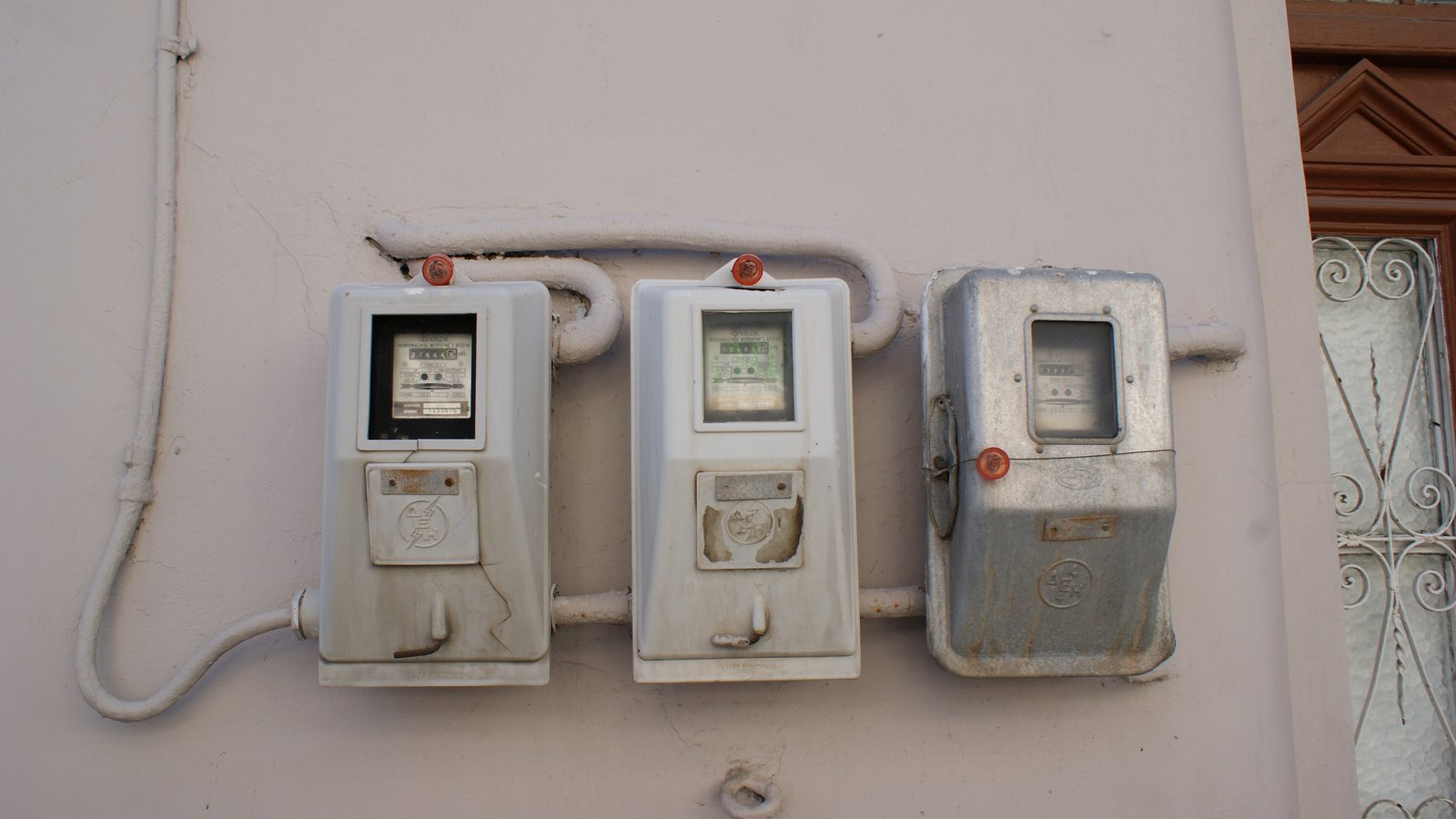
Header photo: Kos-Kos city-Electricity meter-01ASD by Asurnipal, CC BY-SA 4.0, via Wikimedia Commons, cropped; this crop is released under the same licence.
We use AI in our daily operations; posts are reviewed by people before publishing; automated/generated posts are marked as such where needed.