Renting in Cluj-Napoca as a foreigner: contracts, deposits, checks that matter
What rents look like in 2026

Cluj-Napoca is the second most expensive Romanian city for renters after Bucharest, with a citywide average around €600 a month, according to a Storia market analysis covering March 2026 reported by Ştiri de Cluj. In that data, a studio (garsonieră) averaged €400 (up 3% year on year), a two-room apartment €599 (up 2%), and a three-room apartment €700 (down 7% from 2025).
Prices vary by neighbourhood. A Cluj Life breakdown from August 2026 puts the central area around €670 a month, Gheorgheni and Mărăști near €600, Zorilor around €580, Iris near €560, Bună Ziua around €540, and Grigorescu, Borhanci and Mănăștur between €490 and €520. The same piece lists an overall average asking rent of about €580.
Florești, just outside the city line, remains the cheapest option most newcomers consider: listing site Blitz.ro put the neighbourhood average at €427 a month as of its September 11, 2026 update, against roughly €788 for central Cluj on the same platform — only Bulgaria and Chinteni came in lower. Ranges vary widely by building age and finish, so treat any single figure as a starting point, not a quote — actual rent varies; check current listings for a specific street or block.
Where the listings are
Apartments get posted on imobiliare.ro, OLX and Storia, the three general classifieds and property portals covering the whole country, plus city-specific sites and agency pages. A large share of everyday listings, especially room shares and shorter lets, circulate in Facebook groups dedicated to Cluj rentals and to specific universities or expat communities. Ştiri de Cluj advises widening a search to the whole of Cluj County, not just the city proper, since some owners list village addresses to dodge crowded city searches, and to filter for newest listings and refresh often, since decent apartments in central areas move fast.
Deposit, contract and ANAF registration
A deposit (garanție) of one month’s rent is standard; two months appears for furnished or higher-end units. If a fixed-term lease runs out and the tenant stays on and keeps paying without objection from the landlord, the law treats it as a new lease on the same terms but of indefinite duration. A written contract, signed by both parties, is legally sufficient without a notary and serves as evidence if a dispute reaches court.
The Civil Code also sets notice rules: a tenant on a fixed-term lease can always leave early with at least 60 days’ notice, and any clause saying otherwise is void, while on an open-ended lease with monthly rent, unless agreed otherwise, the tenant must give at least a quarter of the rent period and the landlord at least 60 days.
Registering the contract with ANAF, the tax authority, is a legal obligation for the landlord under article 83(5) of the Fiscal Code — in force since January 1, 2023 and restated by Law 239/2025 — not an optional extra. The deadline is 30 days from signing, and again 30 days from any later amendment, using ANAF form C168, which the landlord can file online through the Virtual Private Space (SPV) or at the tax office’s registry. A landlord who skips registration breaches the Fiscal Code and can be notified by the tax office, and the contract loses its enforceable-title status: only a lease registered with ANAF or signed before a notary lets the landlord go straight to a bailiff for unpaid rent or to recover the flat when a fixed term ends, so otherwise a court case comes first.
For foreigners, the registered contract matters beyond the landlord’s tax situation: Romania’s immigration authority (IGI) lists proof of legal possession of the address as a standard document for residence-permit and family-reunification files, and guidance for private rentals points to an ANAF-registered lease as the document that satisfies it. IGI’s own list also accepts a sale-purchase contract, a loan-for-use (comodat) contract, a court decision, or the owner’s notarised statement taking you in, presented with the owner’s title deed. An unregistered, undated, or verbal arrangement is a weak basis for that paperwork.
On the landlord’s side, rent paid by an individual tenant is taxed in 2026 at 10% after a flat 20% deduction — an effective 8% of the gross rent — declared through the annual Declarația unică, while a company tenant withholds the same tax at source.
Utilities and intreținere
Rent is separate from utilities — electricity, gas or district heating, water, internet — and from întreținere, the monthly building-maintenance fee charged by the homeowners’ association for stairwell cleaning, lift upkeep, common-area lighting and administration. The amount depends on the building, the number of residents and whether heating is included, and the association posts it monthly; check the last few statements before signing. Heating in particular can make two apartments with an identical rent cost very different amounts once winter bills arrive.
Scams to watch for
The recurring pattern flagged by local press: a price noticeably below the neighbourhood average, pressure to move fast because “someone else is interested” or because the owner claims to be abroad, and a request to transfer money before any viewing takes place. Ştiri de Cluj, reporting in August 2026 on the student rental crunch, describes agencies charging 200-300 lei upfront for access to listings that turn out not to exist, and the same phone number attached to multiple “different” apartments. The advice from renters who got caught is consistent: no payment changes hands before an in-person viewing and a look at the owner’s ownership documents.
Neighbourhoods newcomers pick
Centru puts everything within walking distance at the highest price. Gheorgheni and Mărăști sit close to offices and universities with good transit. Zorilor is popular with students near the medical campus. Bună Ziua has newer stock near the tech-company offices on the city’s south side. Florești, technically a separate commune bordering Cluj-Napoca, draws newcomers on budget with newer buildings and a straightforward bus link into the centre, at the cost of a longer commute during traffic peaks.
Sources: Source: Cât costă o chirie în Cluj-Napoca în 2026: Al doilea cel mai scump oraș din țară — Ştiri de Cluj.
Source: Închirierea unui apartament în Cluj-Napoca în 2026: prețuri pe cartiere — Cluj Life.
Source: Preturi apartamente de inchiriat Floreşti, Cluj-Napoca — Blitz.ro.
Source: Înregistrare contract închiriere ANAF online 2026 — Formular 168 — Renzi.ro.
Source: Sfaturi pentru studenții care își caută acum chirie în Cluj-Napoca — Ştiri de Cluj.
Official texts: Civil Code (lease, art. 1777+), Fiscal Code (art. 83, rental income).
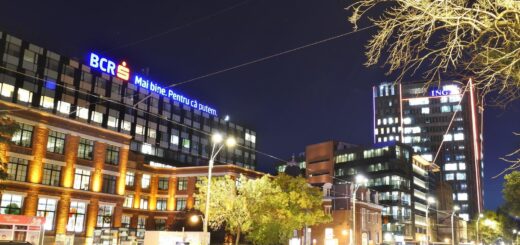
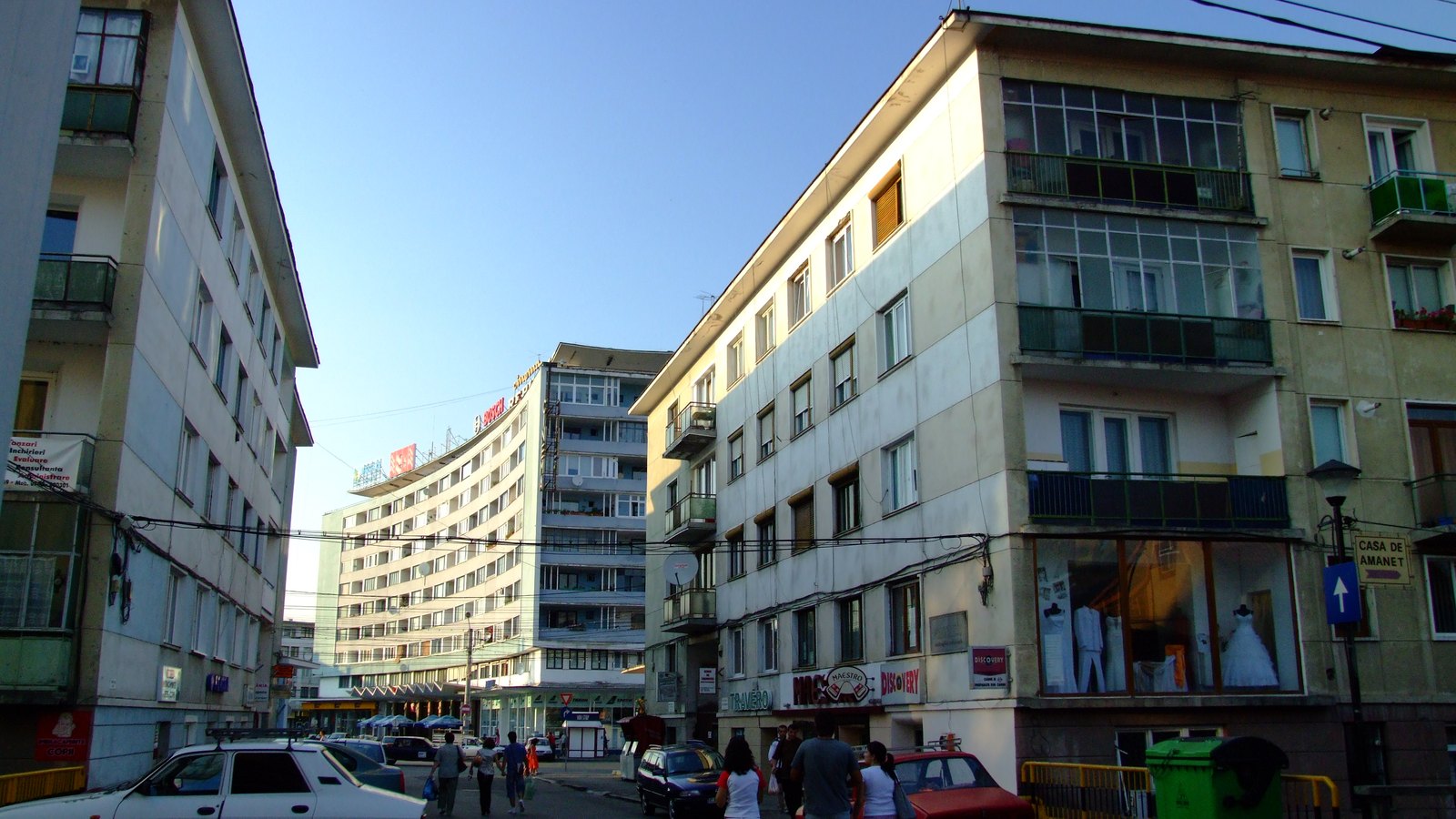
Header photo: Blocks Cluj-Napoca by Jerzy Kociatkiewicz from Colchester, United Kingdom, CC BY-SA 2.0, via Wikimedia Commons, cropped; this crop is released under the same licence.
We use AI in our daily operations; posts are reviewed by people before publishing; automated/generated posts are marked as such where needed.